
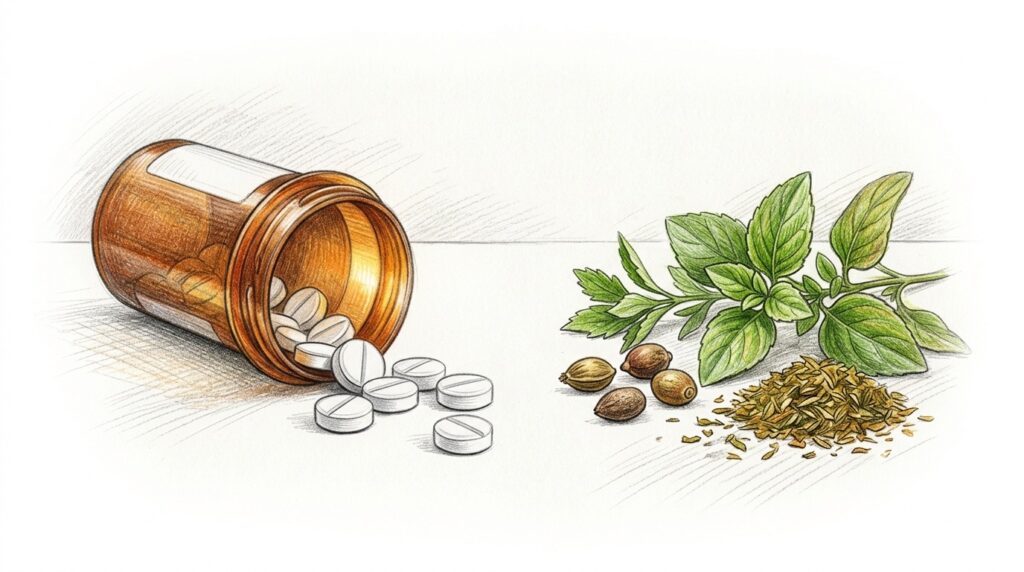
Allopurinol is the most commonly prescribed medication for gout in Australia.
If you’ve been diagnosed, there’s a good chance your GP has either mentioned it or put you on it already.
For some people, it works well. No argument there.
But it comes with a list of side effects that range from mildly annoying to genuinely serious. And a surprising number of gout sufferers taking it don’t fully understand what those side effects are, or what their options might be.
Let’s go through it honestly.
What Is Allopurinol?
Allopurinol is a xanthine oxidase inhibitor.
In plain English, it blocks the enzyme your body uses to produce uric acid. Less production means lower levels in your blood, which means fewer gout attacks over time.
It’s been around since the 1960s. It’s cheap. It’s effective at lowering numbers on a blood test.
That’s why doctors prescribe it so readily for gout.
But lowering a number on a blood test and actually feeling better aren’t always the same thing. Especially when the medication itself introduces new problems.
The Common Side Effects
These are the ones that affect a significant number of people taking allopurinol. They’re not life-threatening, but they can make your day-to-day life genuinely unpleasant.
Initial gout flare-ups
This is the one that catches most people off guard.
When you first start allopurinol, your uric acid levels drop, and that shift can actually trigger gout attacks. Sometimes worse than anything you’ve experienced before.
Your doctor should warn you about this, but many don’t explain it clearly enough. People start the medication expecting relief and get hit with more pain instead.
It can take weeks or even months before the flare-ups settle down.
Many Aussies give up on the medication during this period, thinking it’s making things worse.
Gastrointestinal issues
Nausea, vomiting, diarrhoea, stomach pain. These are reported frequently, especially in the early stages. Some people find they settle over time. Others don’t.
Skin rash
A mild rash is one of the more common side effects. It usually appears in the first few weeks and can range from a minor irritation to something more noticeable.
Most doctors will tell you to stop the medication if a rash develops, because in rare cases it can be a warning sign of something more serious.
Drowsiness and headaches
Less talked about but not uncommon. Some people feel foggy or fatigued on allopurinol. When you’re already dealing with the frustration of gout, the last thing you need is a medication making you feel sluggish.
The Serious Side Effects
These are rarer, but they’re serious enough that you need to know about them.
If you’re on allopurinol, knowing these warning signs could genuinely matter.
Stevens-Johnson Syndrome (SJS)
This is the big one.
SJS is a severe, potentially life-threatening skin reaction. It starts with flu-like symptoms, then a painful rash that spreads and causes the top layer of skin to blister and peel. It requires hospitalisation and can be fatal.
The risk is low for most people, but it’s significantly higher for certain groups. People of South-East Asian, Korean, or Han Chinese descent carry a gene variant (HLA-B*5801) that dramatically increases the risk. Aboriginal and Torres Strait Islander populations may also be at elevated risk.
A simple blood test can check for it before you start the medication. If your GP hasn’t mentioned this, ask about it. In Australia, genetic testing for HLA-B*5801 is available and should be standard practice before starting allopurinol.
Liver problems
Allopurinol can affect liver function.
Signs include yellowing of the skin or eyes, dark urine, persistent nausea, and unusual fatigue. Your doctor should be monitoring your liver function with regular blood tests while you’re on it.
Kidney issues
Ironically, a medication often prescribed alongside concerns about kidney health can itself cause kidney problems in some people. If you already have compromised kidney function, the risk goes up. Dosage adjustments are essential, but they don’t always happen.
Blood disorders
Rarely, allopurinol can affect your blood cell counts, leading to conditions like aplastic anaemia or agranulocytosis. These are serious and require immediate medical attention. Symptoms include unusual bruising, persistent infections, and extreme fatigue.
Hypersensitivity syndrome
Allopurinol hypersensitivity syndrome is a severe multi-organ reaction involving fever, rash, liver dysfunction, kidney failure, and blood cell abnormalities. It’s rare, but the mortality rate is high when it occurs. It typically appears within the first few months of treatment.
Drug Interactions Worth Knowing About
Allopurinol doesn’t play well with every other medication.
Some notable interactions:
- Azathioprine and mercaptopurine: Allopurinol significantly increases the toxicity of these immunosuppressants. If you’re on either, this combination needs careful management.
- Warfarin: Allopurinol can increase the blood-thinning effect, raising the risk of bleeding.
- ACE inhibitors: The combination may increase the risk of hypersensitivity reactions.
- Thiazide diuretics: Common blood pressure medications that can increase the risk of allopurinol side effects.
If you’re on multiple medications, make sure your GP and pharmacist know the full picture.
Why People Look for Alternatives
I talk to people every day who are either considering allopurinol for their gout, currently taking it and not happy, or looking for a way off it.
The reasons fall into a few clear patterns.
The side effects outweigh the benefits.
For some people, the GI issues, fatigue, and ongoing gout flare-ups make the medication feel worse than the original problem.
They don’t like the idea of lifelong medication.
Allopurinol is typically prescribed as a permanent, daily medication. Once you start, you’re usually told you’ll be on it for life. That doesn’t sit well with everyone, especially when gout is partly influenced by diet and lifestyle.
They want to try a natural approach first.
Plenty of people would rather address the root causes through diet, hydration, lifestyle changes, and targeted natural ingredients before committing to a pharmaceutical.
The medication isn’t working well enough.
Some people are on allopurinol and still getting gout attacks, still dealing with elevated uric acid levels. It’s not a silver bullet for everyone.
None of these reasons are wrong. They’re practical, personal decisions about your own health.
What Natural Options Exist?
If you’re exploring alternatives or additions to your gout medication, there are several natural approaches with genuine research behind them.
Diet and lifestyle changes
These are the foundation.
Reducing high-purine foods, cutting back on alcohol (especially beer), staying well hydrated, and managing your weight can all make a meaningful difference to your gout. For some people, these changes alone are enough to bring uric acid levels into a healthy range and reduce gout attacks significantly.
Read the full guide to natural remedies for gout
Targeted natural ingredients
These can provide additional support:
- Tart cherry extract has solid research showing it can help lower uric acid levels and reduce the frequency of gout attacks.
- Celery seed extract acts as a natural diuretic and has anti-inflammatory properties that support uric acid excretion.
- Chanca piedra has been used in traditional medicine for centuries and shows promise in supporting kidney function and uric acid metabolism.
- Green coffee bean extract contains chlorogenic acid, which may help inhibit xanthine oxidase, the same enzyme that allopurinol targets.
- Vitamin C has been shown in multiple meta-analyses to help lower uric acid levels.
The key is using these ingredients at the right dosages, in the right combinations, and consistently over time. A supplement that throws a tiny amount of one ingredient into a proprietary blend won’t cut it.
What to look for in a gout supplement (and what to avoid)
That’s exactly why I created URICAH. I was dealing with my own gout, researching ingredients obsessively, and couldn’t find a supplement that was transparent about what was in it and dosed properly. So I made one. Fourteen clearly labelled natural ingredients, no proprietary blends, every dosage on the label.
Read the full story of why I created URICAH
A Word About Stopping Medication
This is important, so I’ll be direct: do not stop taking allopurinol without talking to your doctor first.
Stopping suddenly can cause a rebound effect where uric acid levels spike dramatically, leading to severe gout attacks. If you want to transition to a natural approach, work with your healthcare provider to do it gradually and safely.
I’m a supplement maker, not a doctor.
I believe in natural approaches, and I’ve seen them work for thousands of gout sufferers. But I also believe in being responsible. Your GP prescribed allopurinol for a reason. If you want to explore alternatives, have that conversation with them. Bring your research. Ask questions. Make an informed decision together.
The Bottom Line
Allopurinol works for some people with gout. It’s a well-established medication with decades of use behind it.
But the trade-offs are significant enough that you deserve to understand them fully.
If you’re experiencing side effects, or if you’d prefer to explore natural options for managing your gout, you have choices. Diet, lifestyle changes, and properly formulated natural supplements can make a real difference.
Do it intelligently. Do it consistently. And do it in partnership with your healthcare provider.
You’re not stuck with one option. You just need the right information to make the best decision for your body.
Explore URICAH with a 90-day money-back guarantee
This article is for informational purposes only and is not intended as medical advice. Consult your healthcare provider before making changes to your health routine.

URICAH! Uric Acid Support
4.85 / 5
read 2,290 customer reviews
$39 AUDTHIS IS YOUR URICAH MOMENT
Our 14 potent, natural ingredients support the body in lowering uric acid levels, alleviating the excruciating pain and discomfort caused by gout.
URICAH™ features powerful ingredients used over thousands of years to fight gout such as Tart Cherry, Celery Seed and Chanca Piedra.
Get back on your feet and live pain free with URICAH™.
LEARN MORE