
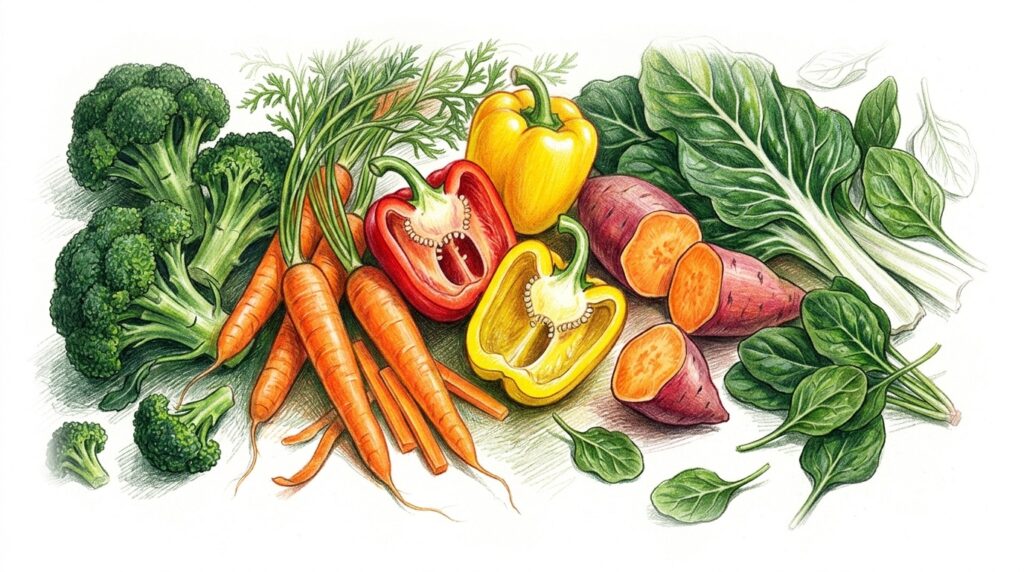
If there’s one food group you can feel genuinely good about when you have gout, it’s vegetables. Understanding vegetables and purines is simpler than most people think.
No vegetable comes close to the purine levels of organ meats, shellfish, or oily fish. Not one.
Even the so-called “high purine vegetables” that sometimes get flagged in old advice are well below the risk threshold of animal-based foods.
Here’s what you need to know, and what you can stop worrying about.
Why Plant Purines Are Different
This is the key point most generic gout advice misses.
Not all purines are created equal. The purines found in vegetables don’t increase uric acid levels the same way animal purines do. Multiple studies have confirmed this. Plant-based purines appear to be metabolised differently, and the overall effect on serum uric acid is significantly less.
A landmark study published in the New England Journal of Medicine found that higher consumption of vegetables, even higher-purine vegetables, was not associated with an increased risk of gout.
In fact, vegetable-rich diets were associated with a lower risk.
So if someone tells you to avoid mushrooms, asparagus, or cauliflower because of purines, understand that the evidence doesn’t support that level of caution. Those vegetables are fine for most people with gout.
Low-Risk Vegetables: Eat Freely
These vegetables are very low in purines and loaded with nutrients that actively support gout management. Make them the foundation of your plate.
Leafy greens
Spinach, kale, silverbeet, rocket, lettuce. Packed with vitamin C, folate, and antioxidants. Spinach technically has moderate purines on paper, but the research consistently shows it doesn’t increase gout risk.
Eat your greens.
Root vegetables
Carrots, sweet potato, beetroot, turnips. Low in purines, high in fibre, and filling. Roasted sweet potato and carrots are an easy side for any meal.
Pumpkin
An Australian kitchen staple for good reason. Low purines, high in beta-carotene, and incredibly versatile. Roast it, soup it, mash it.
Capsicum
Red, green, yellow, doesn’t matter. High in vitamin C, which actively helps lower uric acid levels by improving kidney excretion. Slice them raw into salads or throw them on the barbie.
Very low in purines and a good source of vitamin C and lycopene. There’s some confusion about tomatoes and gout, but the evidence is clear: they’re safe for the vast majority of people.
Cucumbers
High water content helps with hydration. Very low in purines. A no-brainer for salads and snacking.
Zucchini
Low in purines, low in calories, and easy to add to almost anything. Grill it, spiralise it, chuck it in a stir-fry.
Celery
Low purines, high water content, and celery seed extract is actually one of the most well-researched natural compounds for supporting healthy uric acid levels. Eat the vegetable and consider the extract.
Broccoli
Low in purines, high in vitamin C, and a reliable source of fibre. Steam it or roast it with a bit of olive oil and garlic.
Green beans
Simple, low-purine, and easy to prepare. A solid everyday vegetable.
Moderate-Purine Vegetables: Still Fine for Most People
These vegetables have slightly higher purine content than the list above. The research still shows they don’t significantly increase gout risk.
Eat them regularly, just don’t make them the only vegetables you eat.
Cauliflower
Moderate purines, but well within safe limits. Cauliflower rice, roasted cauliflower, cauliflower soup. All good options.
Asparagus
Slightly higher in purines than most vegetables, and it’s one that old gout guides used to warn against. The current evidence says it’s fine in normal portions.
Don’t stress about it.
Mushrooms
Moderate purines. But remember, plant purines don’t hit the same way animal purines do. Mushrooms are also a good source of vitamin D and selenium. Include them in your diet normally.
Low-to-moderate purines, high in vitamin C and fibre. A genuinely helpful vegetable for gout.
Green peas
Moderate purines. A standard serve as a side dish is perfectly fine. You’d need to eat enormous quantities for the purines to become relevant.
No Vegetable Is High-Risk
This is worth stating clearly.
No vegetable produces a purine load comparable to organ meats, sardines, anchovies, or shellfish. The highest-purine vegetables are still dramatically lower risk than the lowest-risk meats and seafood on the “avoid” list.
If you’re spending energy worrying about the purine content of broccoli while still eating meat pies and drinking beer, your priorities need adjusting.
Get the big-ticket items sorted first. Vegetables are your allies, not your enemies.
Practical Tips for Eating More Vegetables
Knowing vegetables are safe is one thing. Actually eating enough of them is another.
Go for variety
Different colours and types give you different nutrients. A mix of leafy greens, root vegetables, and everything in between keeps your meals interesting and your nutrient intake broad.
Fresh or frozen, both work
Frozen vegetables are picked and frozen at peak ripeness. Nutritionally, they’re comparable to fresh, and they’re often cheaper and more convenient. Stock your freezer.
Keep cooking light
Steaming, roasting with olive oil, grilling, and stir-frying are all good methods. Avoid drowning vegetables in heavy sauces, cheese, or batter. That just adds calories, saturated fat, and problems.
Stay hydrated
Vegetables with high water content, like cucumbers, celery, zucchini, and tomatoes, contribute to your daily fluid intake. This matters for gout. Dehydration concentrates uric acid, and every bit of hydration helps.
Build meals around them
Instead of treating vegetables as a side, make them the main event. A big roasted vegetable tray with some grilled chicken. A pumpkin soup. A stir-fry loaded with capsicum, zucchini, and greens. You’ll eat more of them when they’re the star of the plate.
Vegetables as Part of Your Gout Strategy
A vegetable-rich diet supports gout management from multiple angles: lower purine intake, better weight management, improved hydration, and higher intake of vitamin C and antioxidants.
Combine it with proper hydration, sensible alcohol choices, and consistent support for healthy uric acid levels.
I created URICAH to provide that consistent daily support. It contains 14 clearly labelled natural ingredients, including celery seed extract, tart cherry, and vitamin C, at transparent dosages. No proprietary blends. 90-day money-back guarantee. Free shipping across Australia.
Explore natural gout support options
The Bottom Line
Vegetables are the safest food group for gout. Full stop.
Plant purines don’t affect uric acid the way animal purines do. No vegetable is high-risk. Even the moderate-purine vegetables are fine for most people in normal portions.
Eat more of them. Eat a wider variety. Stop worrying about asparagus and mushrooms, and spend that energy on the things that actually drive gout: dehydration, excess weight, alcohol, and high-purine animal foods.
This article is for informational purposes only and is not intended as medical advice. Consult your healthcare provider before making changes to your health routine.

URICAH! Uric Acid Support
4.85 / 5
read 2,290 customer reviews
$39 AUDTHIS IS YOUR URICAH MOMENT
Our 14 potent, natural ingredients support the body in lowering uric acid levels, alleviating the excruciating pain and discomfort caused by gout.
URICAH™ features powerful ingredients used over thousands of years to fight gout such as Tart Cherry, Celery Seed and Chanca Piedra.
Get back on your feet and live pain free with URICAH™.
LEARN MORE