
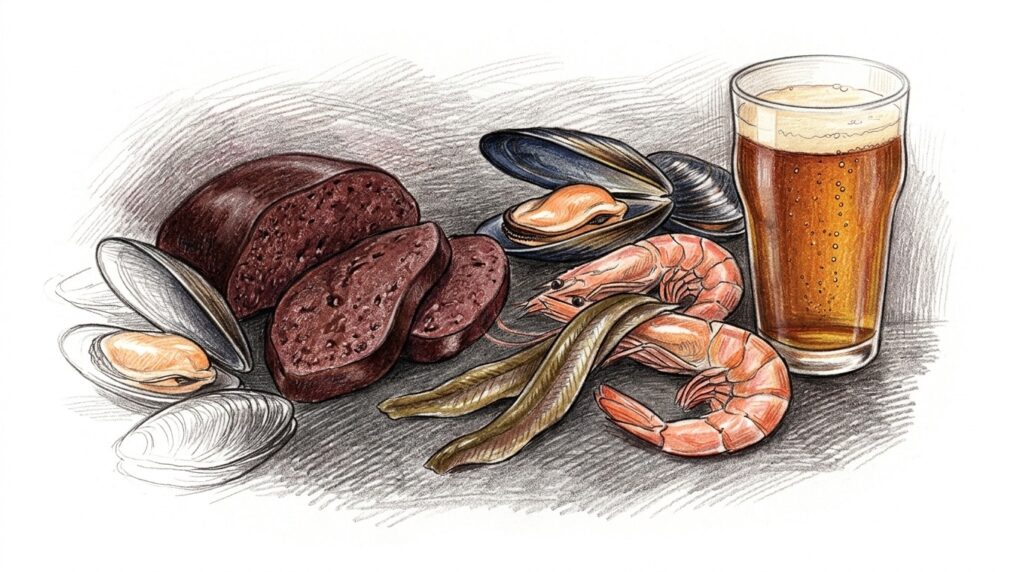
You can eat well 90 per cent of the time and still get blindsided by a gout flare-up because of one meal, one night out, or one food you didn’t realise was high in purines.
Knowing which foods to avoid with gout is just as important as knowing what to eat.
Some gout trigger foods are obvious.
Others are sneaky.
A few are genuinely surprising.
Here are the high-purine foods and other offenders that cause the most damage when you’re managing gout.
Organ Meats: The Highest Risk Category
If there’s one food group to eliminate entirely, it’s organ meats.
Kidney, liver, sweetbreads, pate, and offal of any kind are extraordinarily high in purines. They’re in a league of their own.
One serving of liver or kidney can contain enough purines to spike your uric acid levels significantly.
For someone already dealing with gout, that’s playing with fire.
This isn’t a “moderate your intake” situation. Organ meats should come off your plate completely.
Red Meat: Keep It Controlled
Red meat doesn’t need to be eliminated, but it does need to be managed.
Beef, lamb, and pork all contain moderate to high levels of purines. The fattier the cut, the higher the risk.
The practical rule
Limit red meat to one or two servings per week. Choose lean cuts, trim visible fat, and keep portions around 100g.
That means the 300g T-bone every Friday night needs to become a less frequent event. A smaller serve of lean beef or lamb with plenty of vegetables is a much better approach.
Processed meats are worse than fresh cuts. Sausages, salami, bacon, and corned beef are high in purines and often loaded with sodium, preservatives, and other ingredients that don’t help your cause.
High-Risk Seafood
Seafood is complicated for gout. Some is fine. Some is terrible.
The worst offenders
Shellfish, lobster, crayfish, anchovies, sardines, and herring. These are all high in purines and are well-documented gout triggers.
Shellfish is a particular problem. Prawns, mussels, oysters, and scallops are popular in Australia, especially during summer, but they’re all in the moderate-to-high purine range.
You don’t have to give up all seafood. In fact, some fish choices are better than others. But if you’re eating a seafood platter every weekend, that’s almost certainly contributing to your flare-ups.
Beer: The Biggest Dietary Risk Factor
If I had to pick one single dietary factor most responsible for gout flare-ups in Australia, it would be beer.
Beer is the biggest risk factor for gout attacks. Full stop.
Why is beer so much worse than other alcohol? It’s a double hit. Beer contains high levels of purines from the yeast, and it’s loaded with carbohydrates that convert to sugar. On top of that, alcohol dehydrates you and impairs your kidneys’ ability to excrete uric acid.
Three mechanisms working against you at once. That’s why beer is in its own category.
One or two beers might not trigger an attack on their own. But a session at the pub, a few rounds at the cricket, or a Sunday afternoon on the beers at a mate’s barbie can absolutely set one off.
What about wine?
Wine is a significantly lower risk than beer. Moderate consumption, one or two glasses, is generally tolerable for most gout sufferers outside of acute episodes.
What about spirits?
Spirits without sugary mixers are the lowest-risk alcohol option. But all alcohol dehydrates you, so moderation still matters.
The honest advice: if you’re having frequent flare-ups and you’re drinking beer regularly, that’s the first thing to address.
Sugar: The Hidden Trigger
This is where most people get caught out.
Sugar, specifically fructose, directly increases uric acid production in your body. It’s a separate metabolic pathway from purines, and it’s a major contributor to gout that gets far less attention than it deserves.
The obvious sources
Soft drinks, energy drinks, fruit juices, lollies, cakes, biscuits, and milk chocolate. These are straightforward. Cut them back.
The hidden sources
This is where it gets interesting. Cereals, breads, flavoured yoghurts, muesli bars, sauces, and “low-fat” products are often loaded with added sugar.
The food industry strips fat out of a product, then pumps sugar in to make it taste acceptable. That “healthy” low-fat yoghurt might have 15g of sugar per serve. That breakfast cereal marketed as wholesome might be 25 per cent sugar.
The practical rule
Check the label. Look at sugar per 100g. If it’s over 10g of sugar per 100g, think twice. Under 5g per 100g is a good target.
Once you start reading labels, you’ll be genuinely shocked at how much sugar is hiding in foods you thought were healthy.
Putting It Into Practice
You don’t need to be paranoid about food. You need to be informed.
Here’s the priority order for reducing your gout triggers:
- Eliminate organ meats entirely
- Cut back on beer, or switch to wine or spirits in moderation
- Reduce sugar intake, especially from drinks and processed foods
- Limit red meat to one or two serves per week
- Be selective with seafood, avoid the high-purine varieties
Make these changes and you’ll remove the majority of dietary triggers.
You don’t need a perfect diet. You need to remove the worst offenders and be consistent.
If you want additional support alongside dietary changes, I created URICAH with 14 clearly labelled natural ingredients to help support healthy uric acid levels. Over 2,200 customer reviews and a 90-day money-back guarantee.
Diet is the foundation. Get that right, and everything else works better.
This article is for informational purposes only and is not intended as medical advice. Consult your healthcare provider before making changes to your health routine.

URICAH! Uric Acid Support
4.85 / 5
read 2,290 customer reviews
$39 AUDTHIS IS YOUR URICAH MOMENT
Our 14 potent, natural ingredients support the body in lowering uric acid levels, alleviating the excruciating pain and discomfort caused by gout.
URICAH™ features powerful ingredients used over thousands of years to fight gout such as Tart Cherry, Celery Seed and Chanca Piedra.
Get back on your feet and live pain free with URICAH™.
LEARN MORE