
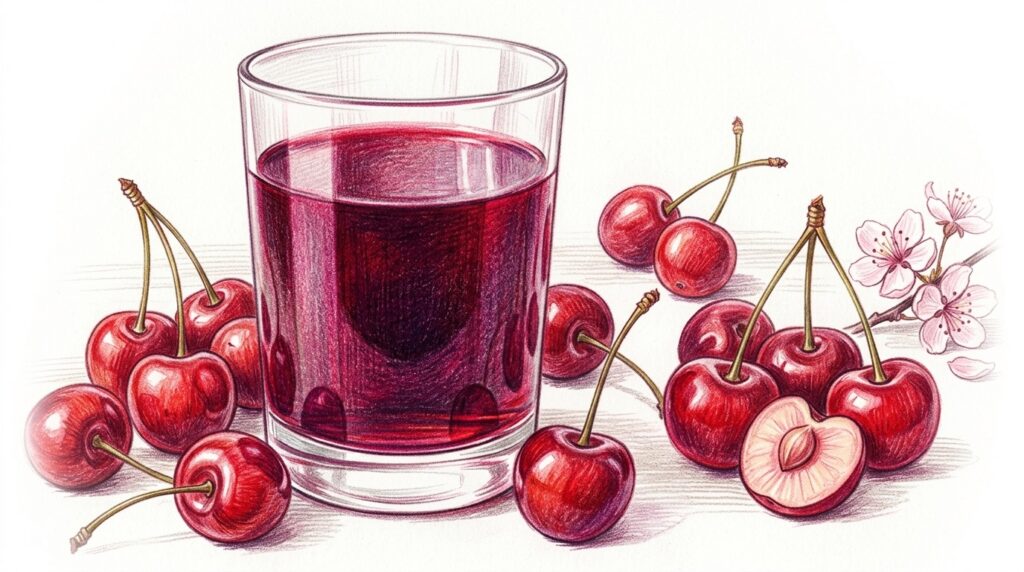
Cherry juice for gout is one of the most popular natural remedies out there.
And there’s good reason for that.
The research behind cherries and uric acid is solid.
But here’s the thing most people don’t consider: cherry juice comes with a significant downside that can actually make your uric acid problem worse.
Why Cherries Work for Gout
Cherries, particularly tart Montmorency cherries, contain high levels of anthocyanins.
These are the compounds that give cherries their deep red colour.
Anthocyanins work on uric acid in two ways:
1. They inhibit xanthine oxidase.
This is the enzyme your body uses to produce uric acid.
It’s the same enzyme that allopurinol targets.
Anthocyanins take a gentler, natural approach to the same mechanism.
2. They have anti-inflammatory properties.
When uric acid crystals form in your joints, inflammation is what causes the pain.
Anthocyanins help support a healthy inflammatory response.
A systematic review published in Evidence-Based Complementary and Alternative Medicine confirmed that cherry intake was associated with lower serum uric acid levels across multiple studies.
The science is clear.
Cherries work.
The question is: what’s the best way to get them?
The Sugar Problem with Cherry Juice
Here’s where it gets interesting.
A standard 250ml glass of tart cherry juice contains roughly 25-30 grams of sugar.
That’s mostly fructose.
And fructose is one of the worst things for uric acid.
When your body metabolises fructose, it rapidly depletes ATP (your cells’ energy currency), which triggers a cascade that produces uric acid as a byproduct.
It’s the same reason sugary drinks are so problematic for people with high uric acid levels.
So you’ve got a situation where the anthocyanins in cherry juice are helping lower uric acid, but the fructose in that same juice is pushing it up.
You’re fighting yourself.
Some studies have shown a net positive effect from cherry juice despite the sugar.
A 2019 study found tart cherry juice reduced serum uric acid by 19.2% in overweight participants.
But you have to ask: how much more effective would the anthocyanins be without the sugar working against them?
Tart Cherry Extract: The Benefits Without the Sugar
This is where tart cherry extract changes the equation.
A concentrated tart cherry extract gives you the anthocyanins, the xanthine oxidase inhibition, and the anti-inflammatory benefits without the fructose load.
A 2025 randomised controlled trial published in the Journal of Dietary Supplements found a 37.4% decrease in urate levels over four weeks using standardised tart cherry extract.
That’s a significant reduction from a capsule that contains essentially zero sugar.
The comparison:
- Cherry juice (250ml): Contains anthocyanins, but also 25-30g of sugar (mostly fructose). The sugar partially counteracts the benefits.
- Cherry juice concentrate (30ml): More concentrated anthocyanins. Still contains sugar, though less per serve.
- Tart cherry extract (capsule): Concentrated anthocyanins. No sugar. Consistent dosage. Easy to take daily.
The extract wins on every practical measure.
Dosage: How They Compare
If you’re using cherry juice, the research has typically used:
- 240ml (8oz) of tart cherry juice daily, or
- 30ml of tart cherry juice concentrate diluted in water
For tart cherry extract, what matters more than raw milligrams is the extract ratio.
A 200mg dose of a 4:1 extract represents 800mg of raw cherry material.
Look for extracts standardised to anthocyanin content.
That’s the marker that tells you you’re actually getting the compounds that do the work.
Most people find it much easier to take a capsule consistently every day than to buy, store, and drink cherry juice daily.
And the extract removes the sugar variable entirely.
What About Fresh Cherries?
Eating fresh tart cherries is fine.
Research has shown that 45 fresh Bing cherries lowered blood uric acid by 14%.
The challenge is availability and consistency.
Fresh tart cherries aren’t available year-round in Australia, and the anthocyanin content varies between batches.
If you enjoy fresh cherries when they’re in season, go for it.
Just don’t rely on them as your primary strategy.
The Bottom Line
Cherry juice works for gout.
The research is clear on that.
But the sugar content is a real problem.
Fructose directly increases uric acid production, which means cherry juice is fighting against itself.
Tart cherry extract gives you everything that makes cherries effective, concentrated and without the sugar trade-off.
Here’s the practical approach:
- Use tart cherry extract as your primary cherry-based strategy
- Skip the daily juice habit if uric acid is your concern
- Enjoy fresh cherries when they’re in season as a bonus
- Combine with other ingredients that work through different pathways
That last point matters.
Tart cherry extract is one of the most effective single ingredients for gout support, but it works even better as part of a multi-ingredient approach.
For a deeper look at the research, read our full guide on tart cherry extract and gout.
URICAH contains tart cherry extract alongside 13 other clearly labelled natural ingredients, including celery seed extract and chanca piedra. No proprietary blends. 90-day money-back guarantee. 2,200+ reviews. Free shipping across Australia.
This article is for informational purposes only and is not intended as medical advice. Consult your healthcare provider before making changes to your health routine.

URICAH! Uric Acid Support
4.85 / 5
read 2,290 customer reviews
$39 AUDTHIS IS YOUR URICAH MOMENT
Our 14 potent, natural ingredients support the body in lowering uric acid levels, alleviating the excruciating pain and discomfort caused by gout.
URICAH™ features powerful ingredients used over thousands of years to fight gout such as Tart Cherry, Celery Seed and Chanca Piedra.
Get back on your feet and live pain free with URICAH™.
LEARN MORE