
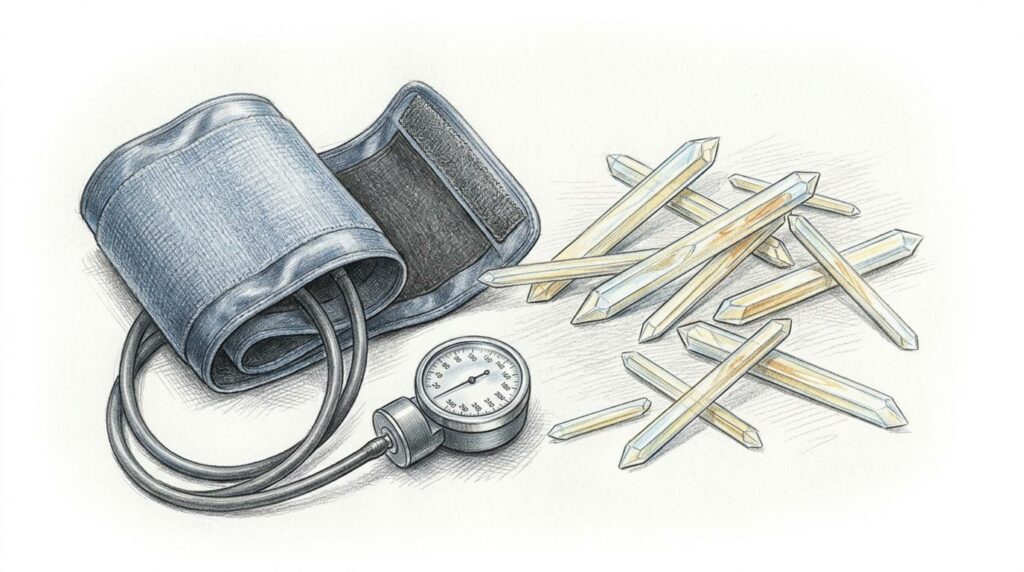
Around 70% of people with gout also have high blood pressure.
That number is staggering. And it tells you something important about how these two conditions are connected beneath the surface.
This is not a random overlap. Gout and hypertension share biological mechanisms. They make each other worse. And the medications used to treat one can aggravate the other.
Understanding this relationship changes how you approach both conditions.
A quick primer on high blood pressure
Blood pressure is the force your blood exerts against your artery walls as it circulates.
Normal blood pressure is below 120/80 mmHg. Hypertension is consistently at or above 140/90 mmHg.
Most people with high blood pressure have no symptoms at all. That is what makes it dangerous. Over time, it damages your heart, kidneys, blood vessels, and brain.
In Australia, around one in three adults has high blood pressure. Many are undiagnosed.
Why gout and high blood pressure travel together
The uric acid that causes gout does far more than form crystals in your joints.
When uric acid levels stay elevated, it affects your entire cardiovascular system through several mechanisms.
Blood vessel damage
Your blood vessels are lined with a thin layer called the endothelium. These cells produce nitric oxide, which signals your vessels to relax and widen.
Elevated uric acid damages endothelial cells. Nitric oxide production falls. Your blood vessels become stiffer and less able to dilate.
Stiffer vessels mean higher pressure. It is a direct, mechanical relationship.
Research in the Journal of the American Society of Nephrology demonstrated that uric acid reduces nitric oxide in a dose-dependent way. The higher the uric acid, the less nitric oxide your vessels can produce.
Oxidative stress and inflammation
Uric acid generates reactive oxygen species inside your blood vessel walls.
These free radicals damage cellular structures and trigger chronic low-grade inflammation. Inflamed arteries are less flexible and more resistant to blood flow.
This is not theoretical. It shows up on scans and in lab work. People with gout have measurably stiffer arteries than people without it, even after accounting for other risk factors.
The renin-angiotensin-aldosterone system (RAAS)
Your body has a hormonal system specifically designed to regulate blood pressure. It is called the RAAS.
Elevated uric acid stimulates the kidneys to produce more renin, which kicks off a hormonal cascade. The end result is angiotensin II, one of the most powerful blood vessel constrictors in your body.
Angiotensin II narrows your vessels and tells your kidneys to hold on to more sodium and water.
More fluid in a tighter space. Blood pressure goes up.
A study published in Hypertension found RAAS activation in teenagers with elevated uric acid. The process starts early, long before gout or clinical hypertension develops.
Kidney strain
Your kidneys handle both uric acid excretion and blood pressure regulation.
Chronically elevated uric acid creates low-grade inflammation and microscopic damage in the kidney tubules. This gradually impairs the kidneys’ ability to manage sodium and fluid balance.
Damaged kidneys struggle to keep blood pressure in check.
For more on how this works, see our guide on uric acid and kidney health.
The medication trap
This is one of the most frustrating parts of the gout-hypertension relationship.
Thiazide diuretics are a first-line treatment for high blood pressure. They work by increasing urine output, which reduces blood volume and lowers pressure.
But diuretics also reduce your kidneys’ ability to clear uric acid. Your blood pressure may come down, but your uric acid goes up. And that elevated uric acid then pushes your blood pressure back up through the mechanisms described above.
It is a genuine vicious cycle.
Loop diuretics have the same effect. If you are on either type and have gout, your medication could be working against you on the uric acid front.
Our detailed guide on medications that raise uric acid covers this and other common culprits.
The good news is that not all blood pressure medications have this effect. Losartan, an angiotensin receptor blocker, actually promotes uric acid excretion. If you are on a diuretic and have gout, it is worth discussing alternatives with your doctor.
What the research shows
The evidence connecting these conditions is robust.
A large meta-analysis in Arthritis and Rheumatology found that every 1 mg/dL increase in serum uric acid raised the risk of developing hypertension by 13%.
A study following more than 21,000 people over 12 years showed those with the highest uric acid levels were 80% more likely to develop high blood pressure.
Perhaps the most compelling evidence comes from a controlled trial in teenagers. Adolescents with newly diagnosed high blood pressure and elevated uric acid were given a uric acid-lowering drug. Their blood pressure dropped significantly. When the drug was stopped, blood pressure rose. When it was restarted, pressure dropped again.
That is about as close to proving causation as you get in clinical research.
Part of the metabolic picture
Gout and high blood pressure are both features of metabolic syndrome.
This cluster of related conditions includes insulin resistance, central obesity, high triglycerides, and abnormal cholesterol. They share common root causes and tend to appear together.
If you have gout and high blood pressure, you would be wise to have your blood sugar, cholesterol, and liver function checked as well.
Our guides on gout and heart disease and gout and diabetes explore these connections in detail.
Practical steps that help both conditions
The strategies that lower uric acid and the strategies that lower blood pressure overlap significantly. This is actually good news. You are not fighting on two fronts. You are fighting on one.
Stay properly hydrated
Dehydration concentrates uric acid and forces your cardiovascular system to work harder. Both push blood pressure upward.
Aim for at least 2 litres of water daily. More in hot weather or if you are physically active.
Our guide on dehydration and gout explains why this matters so much.
Manage your weight
Excess body weight is one of the strongest predictors of both gout and hypertension.
Even a modest reduction of 5-10% of your body weight can meaningfully improve both uric acid levels and blood pressure readings.
Avoid crash diets. Rapid weight loss breaks down cells quickly, releasing purines that spike uric acid. Slow and steady is the approach that works.
See our guide on obesity, weight, and gout for more.
Cut back on sugar
Fructose is the only sugar that directly raises uric acid production in your body. It also drives insulin resistance, which impairs uric acid excretion.
Sugary drinks, fruit juices, and processed foods loaded with added sugar are worth eliminating or dramatically reducing.
Reduce alcohol
Beer is the worst offender. It raises uric acid directly through its purine content and indirectly by impairing uric acid excretion.
Alcohol also raises blood pressure by affecting your nervous system and fluid balance.
Cutting back on alcohol is one of the single most effective things you can do for both conditions.
Exercise consistently
Regular moderate exercise lowers blood pressure and supports healthy uric acid metabolism.
Walking, swimming, and cycling are excellent options. Avoid extreme exercise intensity, which can temporarily spike uric acid through muscle breakdown.
Lower your stress
Chronic stress elevates cortisol, which raises both blood pressure and uric acid.
This is not about meditating for an hour a day. It is about practical stress management that fits your life.
Our guide on stress and gout covers actionable strategies.
Consider natural support
Certain natural compounds may help support healthy uric acid levels. Tart cherry, quercetin, and vitamin C have evidence behind them.
See our guide on natural ways to manage gout for research-backed options.
Have the right conversation with your doctor
If you have both gout and high blood pressure, you need a coordinated approach.
Ask your doctor to review your blood pressure medications specifically in light of your gout. Diuretics that raise uric acid may be doing more harm than good in your case.
Ask about alternatives like losartan that can address blood pressure while supporting uric acid excretion.
Get your uric acid levels checked regularly. Our guide on uric acid levels explained will help you understand what the numbers mean.
The takeaway
Gout and high blood pressure are not separate problems that happen to coexist.
They are biologically intertwined. Uric acid damages blood vessels, activates pressure-raising hormones, and impairs kidney function. Common blood pressure medications raise uric acid further, creating a self-reinforcing loop.
But this also means that addressing the shared root causes, through hydration, weight management, dietary changes, and the right medications, can improve both conditions at once.
You are not managing two diseases. You are managing one interconnected metabolic picture.
This article is for informational purposes only and is not intended as medical advice. Consult your healthcare provider before making changes to your health routine.

URICAH! Uric Acid Support
4.85 / 5
read 2,290 customer reviews
$39 AUDTHIS IS YOUR URICAH MOMENT
Our 14 potent, natural ingredients support the body in lowering uric acid levels, alleviating the excruciating pain and discomfort caused by gout.
URICAH™ features powerful ingredients used over thousands of years to fight gout such as Tart Cherry, Celery Seed and Chanca Piedra.
Get back on your feet and live pain free with URICAH™.
LEARN MORE