
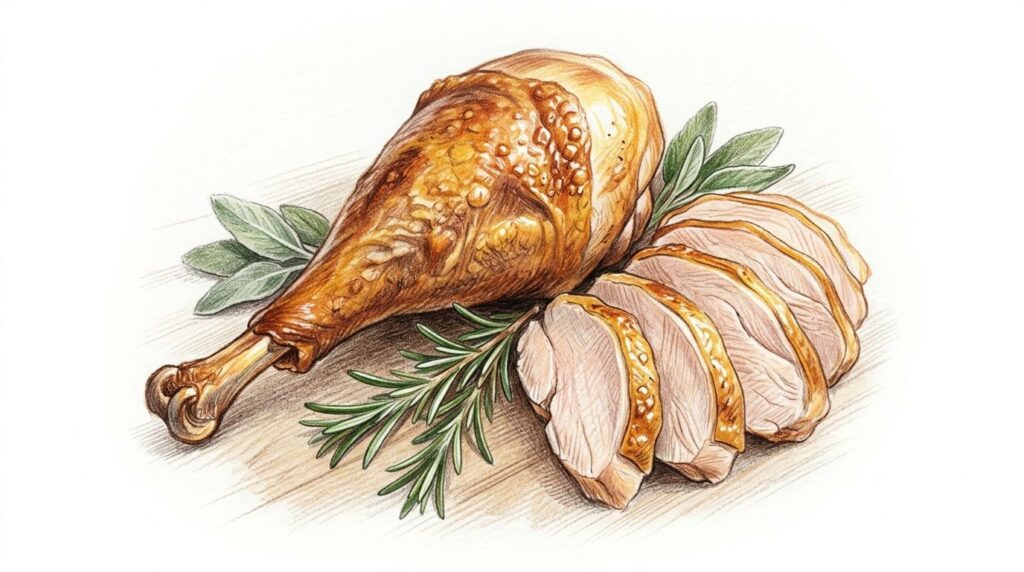
Most people with gout know the big offenders: organ meats, shellfish, beer. But turkey? It flies under the radar.
That’s actually a good thing, because turkey is one of the safer meat options for gout management.
Turkey sits in the moderate purine range at roughly 150mg per 100g. That’s comparable to chicken and meaningfully lower in risk than red meat. With the right cuts and sensible portions, turkey fits comfortably into a gout-friendly diet.
Here’s the full breakdown.
Turkey Purine Content by Cut
Not all turkey cuts are equal. White meat and dark meat differ, and processed turkey is its own category.
| Turkey Cut | Purines per 100g | Category |
|---|---|---|
| Turkey breast (skinless) | 130-150mg | Moderate |
| Turkey thigh (skinless) | 150-170mg | Moderate |
| Turkey leg/drumstick | 155-175mg | Moderate-high |
| Turkey mince | 140-165mg | Moderate (varies by fat content) |
| Turkey deli slices | 100-130mg | Moderate (but high sodium) |
| Turkey liver | 300mg+ | Very high |
White meat is your best bet. The breast has the lowest purine content and the highest protein-to-fat ratio.
Dark meat (thigh, leg) is slightly higher in purines. The difference is about 20-30mg per 100g. Not enormous, but consistent.
Turkey liver is in the same category as all organ meats. Avoid it.
How Turkey Stacks Up Against Other Proteins
Context matters more than numbers in isolation. Here’s how turkey compares to the proteins you’re probably choosing between.
| Protein | Purines per 100g | Notes |
|---|---|---|
| Turkey breast | 130-150mg | Lean, moderate purines |
| Chicken breast | 130-150mg | Almost identical to turkey |
| Pork loin | 130-150mg | Similar when lean |
| Beef sirloin | 110-150mg | Similar range, but red meat carries extra risk |
| Lamb | 140-160mg | Moderate, fattier cuts higher |
| Eggs | Very low | Best low-purine protein |
| Tofu | 60-70mg | Low purine, plant-based |
Turkey and chicken are essentially interchangeable from a purine perspective. If you can eat chicken, you can eat turkey.
The advantage both have over red meat goes beyond purines. Red meat carries additional gout risk factors including higher saturated fat and iron content. Research from the New England Journal of Medicine found that red meat consumption was more strongly associated with gout than poultry consumption.
Breast vs Dark Meat: Which to Choose
Turkey breast (white meat)
Your best option. Lower in purines, lower in fat, high in protein. A 150g serve delivers roughly 195-225mg of purines. That’s well within a manageable daily range.
Breast meat is also the most versatile. Slice it for sandwiches, dice it for stir-fries, roast it whole, or grill fillets.
Turkey thigh and leg (dark meat)
Higher in flavour, slightly higher in purines and fat. The 20-30mg per 100g difference from breast won’t trigger a flare on its own, but it adds up if you’re eating dark meat consistently.
Dark meat is fine occasionally. Just don’t default to it when breast is available.
Turkey skin
Remove it. Turkey skin concentrates fat and adds to the purine load. A roast turkey looks better with golden skin, but your joints won’t thank you for eating it regularly.
Bottom line on cuts
Breast first. Dark meat sometimes. Skin off. Liver never.
Processed Turkey: Lower Purines, Higher Problems
Processed turkey products often show lower purine numbers than fresh turkey. Don’t be fooled.
Turkey deli slices
Around 100-130mg purines per 100g. Sounds good until you see the sodium content, which is typically 500-800mg per 100g. Excessive sodium can impair kidney function, making it harder for your body to excrete uric acid. The nitrates and preservatives aren’t doing you any favours either.
Turkey sausages
Fillers and water dilute the purine count, but add sodium, fat, and processing chemicals. Better than pork snags for purines, but that’s about the only compliment.
Turkey bacon
Heavily processed. High sodium. Moderate purines. The overall health profile makes it hard to recommend.
The verdict on processed turkey
Fresh turkey beats processed every time. Don’t trade marginally lower purine numbers for a load of sodium, nitrates, and fillers.
Christmas Turkey and Holiday Meals
Christmas and holidays are when most Australians eat turkey. Here’s how to handle it without setting off a flare.
A typical Christmas serving of roast turkey is 150-200g. That delivers roughly 200-300mg of purines from the turkey alone. Add gravy (which concentrates purines from meat drippings), stuffing, and whatever else is on the table.
Smart strategies for the holiday table:
- Go for breast meat over drumsticks and thighs
- Skip the skin
- Go easy on meat-based gravy
- Avoid the turkey liver pate if someone’s made it
- Fill your plate with roasted vegetables and salad
- Don’t pair the turkey with other high-purine proteins (skip the ham or choose one or the other)
- Stay hydrated throughout the day, especially if there’s alcohol involved
- Avoid beer. If you’re drinking, wine in moderation is the lower-risk choice.
One big meal isn’t going to ruin your gout management. Consistent patterns matter more than individual events. But stacking turkey with ham, prawns, beer, and rich gravy at the same meal is asking for trouble.
How Much Turkey Is Safe?
For regular meals (not just holidays), these guidelines work for most people managing gout.
Serving size
120-150g of cooked turkey per meal. That’s roughly a palm-sized portion.
Frequency
Two to three times a week, as part of a varied protein rotation. Turkey doesn’t need special treatment compared to chicken.
Best pairings
- Green salads and vegetables (effectively zero gout risk)
- Rice, pasta, bread (low purine)
- Beans and lentils (plant purines don’t raise uric acid)
- Avocado (low purine, healthy fats)
When to cut back
- During a gout flare or the recovery period after one
- If your uric acid levels are running high and you’re actively trying to lower them
- If you’re eating other moderate-to-high purine proteins every day
Turkey Mince: A Practical Red Meat Swap
This is one of the most useful things you can do with turkey.
Turkey mince works in bolognese, tacos, burgers, meatballs, and stir-fries. It has similar purine content to beef mince but significantly less saturated fat, especially when you buy lean turkey mince.
The purine reduction from switching beef mince to turkey mince is small. But you’re removing the additional risk factors that come with red meat consumption, including the saturated fat and iron that research links to elevated uric acid.
I use turkey mince in my own cooking regularly. The taste difference is minimal, especially with proper seasoning. In a taco or a bolognese with onion, garlic, tomatoes, and herbs, you won’t miss the beef.
Quick Meal Ideas with Turkey
Turkey breast stir-fry
Sliced turkey breast with capsicum, snow peas, ginger, garlic, and soy sauce over rice. Quick, balanced, and well within safe purine limits.
Turkey and salad wrap
Sliced roast turkey breast, mixed leaves, avocado, and a squeeze of lemon in a wholemeal wrap. Easy work lunch.
Turkey mince bolognese
Swap beef for turkey mince in your regular bolognese. Add plenty of vegetables. Serve over pasta or with zucchini noodles.
Roast turkey breast with vegetables
A small turkey breast roast with roasted sweet potato, pumpkin, and green beans. Simple Sunday dinner.
The Bottom Line
Turkey is a safe and sensible protein choice for gout management.
It sits in the moderate purine range, comparable to chicken and lower in risk than red meat. Choose breast over dark meat when you can. Skip processed turkey despite the lower purine numbers. Remove the skin.
Keep portions to 120-150g, two to three times a week, and pair with vegetables, salads, and whole grains.
Use it alongside chicken, fish, eggs, and plant proteins as part of a varied diet. That’s the sustainable approach to gout management, and turkey fits right into it.
This article is for informational purposes only and is not intended as medical advice. Consult your healthcare provider before making changes to your health routine.

URICAH! Uric Acid Support
4.8 / 5
read 2,412 customer reviews
$39 AUDTHIS IS YOUR URICAH MOMENT
Our 14 potent, natural ingredients support the body in lowering uric acid levels, alleviating the excruciating pain and discomfort caused by gout.
URICAH™ features powerful ingredients used over thousands of years to fight gout such as Tart Cherry, Celery Seed and Chanca Piedra.
Get back on your feet and live pain free with URICAH™.
LEARN MORE