
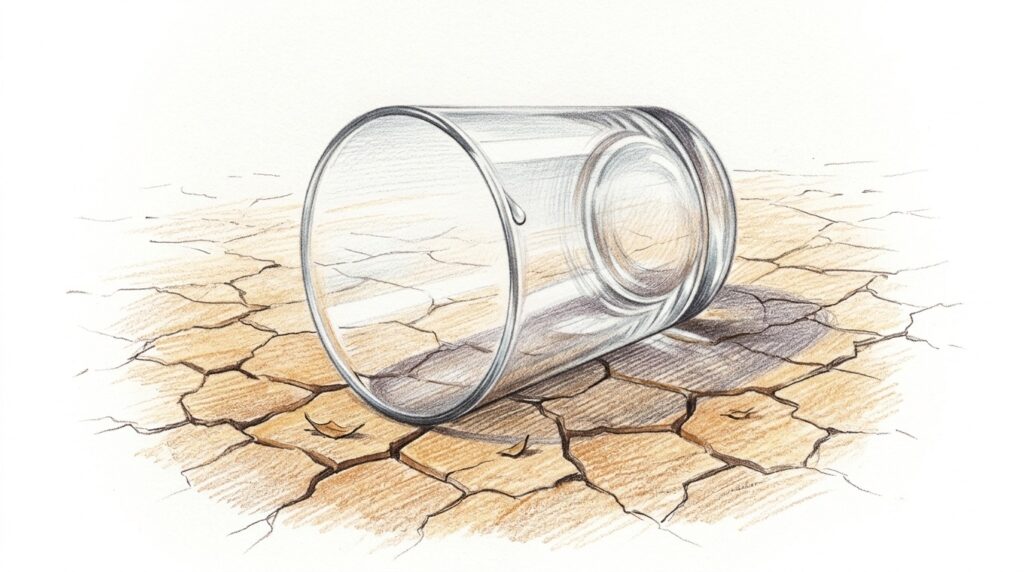
You could be doing everything else right.
Eating well. Avoiding high-purine foods. Taking the right supplements.
And still end up with a gout attack simply because you’re not drinking enough water.
Dehydration and gout are directly connected. It’s one of the most underrated gout triggers, and one of the easiest to fix.
Living in Australia makes this even more relevant. Hot summers, outdoor lifestyles, and plenty of cold beers at the barbie. It’s basically a dehydration trifecta.
How Dehydration Triggers Gout
Your kidneys are responsible for flushing about 70% of the uric acid out of your body. They filter it from your blood and excrete it in your urine.
Simple enough.
But your kidneys need water to do this. Lots of it.
When you’re dehydrated, two things happen.
1. Your blood becomes more concentrated.
Less water in your system means the same amount of uric acid is dissolved in less fluid. Your serum uric acid levels go up, even though your body hasn’t produced any extra uric acid. It’s a concentration effect.
2. Your kidneys slow down.
When water intake drops, your body prioritises keeping essential functions running. Kidney filtration rate decreases. Less blood gets filtered per hour. Less uric acid gets flushed out. It accumulates.
The combination is brutal.
You’ve got more concentrated uric acid in your blood and your kidneys are less able to remove it. That’s when levels spike, crystals form, and a gout attack hits.
How Much Water Do You Actually Need?
You’ve probably heard “eight glasses a day.” That’s a rough starting point, but it’s not the full story, especially in Australia.
For people managing gout, the research and practical experience suggest:
- Minimum 2 litres per day for most adults. That’s about eight standard glasses.
- 2.5 to 3 litres if you’re physically active, live somewhere hot (which is most of Australia for a good chunk of the year), or are actively managing gout.
- More during specific situations (we’ll cover those below).
The goal is to keep your urine pale yellow.
If it’s dark yellow or amber, you’re not drinking enough. If it’s clear, you’re well hydrated. Simple visual check.
Research has found that higher water intake is associated with a significant reduction in flare-up risk. Participants who drank eight or more glasses of water in the 24 hours before an episode had a 48% lower risk compared to those who drank one glass or fewer.
That’s a massive difference for something as simple as drinking water.
Signs You’re Dehydrated
Most people walk around mildly dehydrated without realising it. In the Australian climate, this is even more common.
Here’s what to watch for:
- Dark urine. The most reliable day-to-day indicator.
- Thirst. By the time you feel thirsty, you’re already dehydrated. Don’t wait for thirst.
- Dry mouth and lips.
- Fatigue. Dehydration saps your energy before you notice other symptoms.
- Headaches. Especially in the afternoon.
- Reduced urine frequency. If you’re only going to the bathroom two or three times a day, you’re not drinking enough.
- Muscle cramps. Dehydration affects electrolyte balance.
If any of these are regular occurrences for you, increasing your water intake is the first thing to address.
Before supplements. Before diet changes. Water.
When You Need Extra Water
Certain situations increase your fluid requirements significantly. If you’re managing gout, pay extra attention during these times.
The Australian summer
This is the big one.
When it’s 35+ degrees and you’re spending time outside, your body can lose litres of fluid through sweat. An extra litre (or two) on hot days is a minimum. If you’re working outdoors, on a building site, or doing manual labour in the heat, you may need 4 to 5 litres daily.
I hear from plenty of Aussie customers who notice their gout flares up more in summer. Dehydration is almost always a factor.
Exercise
You lose fluid through sweat. Even moderate exercise can cost you 500ml to 1 litre per hour.
Playing weekend sport, going to the gym, or even a long walk in the sun all count. Drink before, during, and after. Don’t wait until you’re thirsty.
Alcohol consumption
Alcohol is a diuretic. It makes you urinate more, which means you lose water faster.
This is a double problem for gout: the alcohol blocks uric acid excretion and the dehydration concentrates what’s already there. Always alternate alcoholic drinks with water. Hydrate heavily the next day.
Flying
Cabin air is extremely dry. A long-haul flight can leave you significantly dehydrated.
This is why some people notice gout attacks after travel. Drink water throughout the flight, not just when the trolley comes around.
Illness
Fever, vomiting, and diarrhoea all cause rapid fluid loss.
If you’re unwell, increase your water intake substantially. This is when uric acid levels can spike unexpectedly.
Coffee and tea (in excess)
Moderate caffeine is fine. But heavy coffee intake (five or more cups daily) can have a mild diuretic effect.
If you’re a big coffee drinker, make sure you’re compensating with extra water.
What Counts as Hydration?
Not all fluids are equal.
Best options:
- Water. Plain and simple. The gold standard. Tap water, filtered water, sparkling water, they all count.
- Herbal tea. Counts towards your daily intake. Good option if you find plain water boring.
- Water with lemon or lime. Still water, just with flavour. Some people find this helps them drink more consistently.
Acceptable in moderation:
- Regular tea and coffee. These do contribute to hydration despite the mild diuretic effect. Up to three to four cups is fine.
- Milk. Interestingly, low-fat dairy may also help lower gout risk independently.
Avoid or minimise:
- Sugary soft drinks. Fructose actively raises uric acid production. A can of soft drink is working against you.
- Fruit juice. Even 100% juice contains fructose. Whole fruit is better because the fibre slows absorption.
- Energy drinks. High in sugar and caffeine. Not helpful.
- Alcohol. Net negative for hydration.
The simplest rule: if it’s got sugar in it, it’s not helping. Stick to water and unsweetened drinks.
Practical Hydration Tips That Work
Knowing you need to drink more water and actually doing it are different things.
Here’s what works.
Keep a water bottle with you.
Obvious, but the single most effective habit. If it’s within arm’s reach, you’ll drink it. A 750ml or 1-litre bottle is ideal. Keep one in the car, one at your desk, one in your bag.
Front-load your intake.
Drink 500ml first thing in the morning. You wake up dehydrated after 7-8 hours without water. Getting a head start makes the rest of the day easier.
Set reminders if needed.
Until the habit sticks, use your phone. Every hour or two, take a drink. Most people find they don’t need reminders after a couple of weeks.
Drink before meals.
A glass of water before breakfast, lunch, and dinner adds 750ml without any effort.
Track it for a week.
Actually count your glasses. Most people who think they drink “enough” are surprised by how little they’re actually consuming.
Make it easy.
If you don’t like plain water, add lemon. Drink herbal tea. Use sparkling water. The best hydration habit is the one you’ll actually stick with.
Keep cold water accessible in summer.
Fill a bottle the night before and put it in the fridge. When it’s 38 degrees in Melbourne or Sydney, cold water is much easier to drink than lukewarm.
The Connection to Supplementation
Hydration and supplementation work together.
The ingredients in a good gout supplement support your kidneys’ ability to flush uric acid. But your kidneys need water to do the flushing. It’s like having a good filtration system with no water running through it.
URICAH contains 14 natural ingredients that support healthy uric acid levels and kidney function, including celery seed extract and chanca piedra for kidney support. But I always tell customers: take it with a big glass of water, and keep drinking throughout the day. The supplement works best when your body is properly hydrated.
No proprietary blends. Every dosage on the label. 90-day money-back guarantee. 2,200+ customer reviews. Free shipping across Australia.
Read about natural ways to manage gout
The Bottom Line
Dehydration and gout are closely linked. It’s one of the most common, most overlooked triggers, and one of the simplest to fix.
Drink at least 2 litres of water per day. More when it’s hot (which in Australia is often). More when you’re active, drinking alcohol, or flying.
Keep your urine pale yellow. Stick to water and unsweetened drinks.
It costs nothing. And it works.
This article is for informational purposes only and is not intended as medical advice. Consult your healthcare provider before making changes to your health routine.

URICAH! Uric Acid Support
4.8 / 5
read 2,412 customer reviews
$39 AUDTHIS IS YOUR URICAH MOMENT
Our 14 potent, natural ingredients support the body in lowering uric acid levels, alleviating the excruciating pain and discomfort caused by gout.
URICAH™ features powerful ingredients used over thousands of years to fight gout such as Tart Cherry, Celery Seed and Chanca Piedra.
Get back on your feet and live pain free with URICAH™.
LEARN MORE