
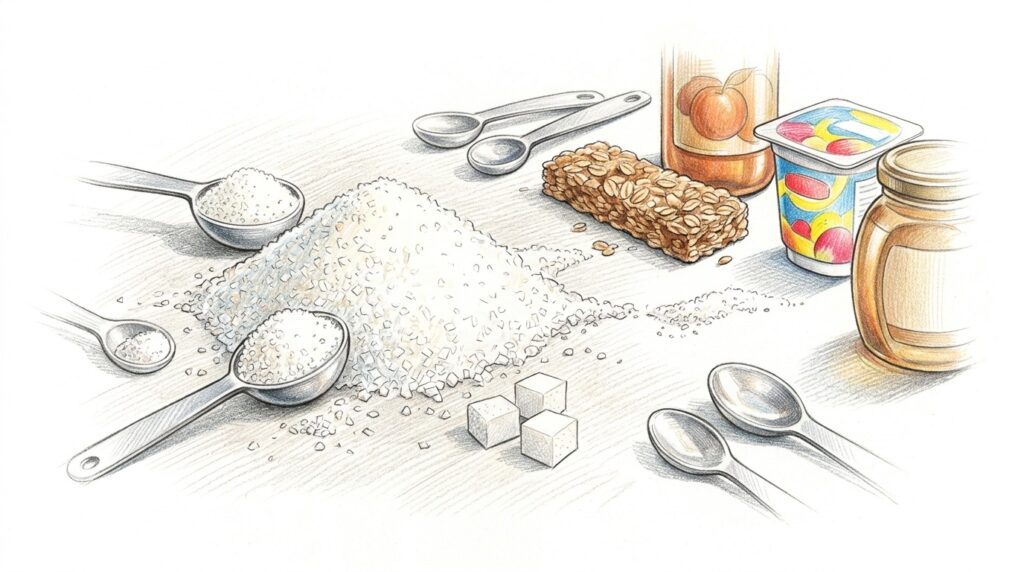
Sugar and gout have a relationship that flies under the radar for far too many people.
You already know sugar isn’t great for you. But if you’re managing gout, sugar isn’t just “not great.” Fructose directly increases uric acid production, and it’s hiding in places you wouldn’t expect.
Most people with gout focus on purines. Red meat, shellfish, organ meats. That’s important, but sugar and uric acid have a connection that gets far less attention than it deserves.
How Sugar Makes Gout Worse
Here’s what happens when you consume sugar, particularly fructose.
Your body metabolises fructose in the liver. During that process, it produces uric acid as a byproduct. More fructose in, more uric acid out. It happens within minutes of consumption.
But it gets worse.
Fructose metabolism also reduces your kidneys’ ability to excrete uric acid. So you’re simultaneously producing more uric acid and getting rid of less of it.
That’s a double hit. And it happens every single time you consume fructose in significant quantities.
This isn’t fringe science. The connection between fructose consumption and elevated uric acid levels is well established in the research. If you’re managing gout and not paying attention to sugar, you’re missing a major piece of the puzzle.
The “Fat-Free” Trap
This one catches a lot of people out.
When food manufacturers remove fat from a product, the food tastes bland. So they replace it with sugar to make it palatable again. The result? Products marketed as “healthy” and “fat-free” that are loaded with sugar.
Fat-free yoghurt (read our guide on dairy and gout for better options). Low-fat muesli bars. Reduced-fat salad dressings. “Light” sauces and marinades.
Check the labels. Many of these products contain more sugar per serve than a Tim Tam.
You think you’re making a healthy choice. Your uric acid levels disagree.
The rule is simple: if it says “fat-free” or “low-fat” on the front, flip it over and check the sugar content on the back. You’ll be surprised how often the numbers are shocking.
Breakfast Cereals: The Morning Sugar Bomb
Breakfast is where most Australians unknowingly start their day with a massive sugar hit.
Walk down the cereal aisle at Woolies or Coles and look at the nutritional panels. Many popular cereals marketed as “healthy” contain 20 to 30 per cent sugar by weight. Some are even higher.
Granola and muesli are some of the worst offenders. They look wholesome, they’re marketed as natural, and they’re often packed with honey, dried fruit, and sugar.
A standard serve of some popular granola brands contains more sugar than two chocolate biscuits.
Even “whole grain” cereals with health claims on the box can contain significant added sugar. The marketing does not match the reality.
If you’re eating cereal every morning, you could be consuming 15 to 20 grams of sugar before you’ve even left the house. That’s already half your daily target, and the day has barely started.
Fruit: The Confusing One
Fruit is healthy. You’ve heard that your whole life. And in moderation, it is.
But fruit contains fructose. And fructose, as we’ve covered, directly increases uric acid production within minutes of consumption.
This doesn’t mean you should stop eating fruit entirely. It means you need to be smart about how much and which types.
Some fruits are higher in fructose than others. Mangoes, grapes, apples, and cherries are on the higher end. Berries, kiwifruit, and citrus fruits tend to be lower.
The practical advice is to limit yourself to one to two serves of fruit daily. That’s enough to get the vitamins, fibre, and antioxidants without overloading your system with fructose.
And here’s the critical point: fruit juice is not the same as whole fruit. When you juice a fruit, you remove the fibre and concentrate the sugar. A glass of apple juice contains the fructose from roughly four apples with none of the fibre that slows absorption.
Your body gets a concentrated fructose hit, and your uric acid spikes accordingly.
Soft Drinks: The Obvious (and Not So Obvious) Problem
A standard 375ml can of soft drink contains around 40 grams of sugar. That’s more than your entire daily recommended limit in one can.
Most Australians know soft drinks aren’t healthy. But knowing it and acting on it are different things.
Soft drink consumption in Australia is still significant, and for gout sufferers, every can is a direct uric acid spike.
What about diet soft drinks? They don’t contain fructose, but artificial sweeteners come with their own questions around metabolic health. The better move is to shift to water, sparkling water, or naturally flavoured alternatives.
Energy drinks are another trap. They combine high sugar content with caffeine and other stimulants, and the sugar levels are often comparable to or higher than regular soft drinks.
Sugar Addiction Is Real
Here’s something that doesn’t get talked about enough.
Sugar activates the same dopamine reward pathways in the brain as addictive substances. Research has shown that sugar consumption triggers dopamine release in a pattern that parallels what happens with other addictive compounds.
That’s what the science shows.
This is why cutting sugar feels so difficult. Your brain has been conditioned to seek out sugar, and when you reduce your intake, you experience genuine withdrawal symptoms: cravings, irritability, fatigue, headaches.
Understanding this matters because it explains why “just eat less sugar” is such useless advice. You’re fighting a neurochemical response, not a character flaw.
The practical approach is gradual reduction, not cold turkey. Swap one sugary item at a time. Read labels obsessively until it becomes habit. Give your brain time to adjust.
Practical Rules for Managing Sugar and Gout
Here’s what actually works in the real world.
Check the label: stay under 5g of sugar per 100g
This is the single most useful rule. Flip over any packaged food and look at the “sugars” line in the nutritional panel. If it’s above 5 grams per 100 grams, it’s higher in sugar than you want. Below 5g per 100g is a reasonable target for everyday foods.
Limit total sugar to 30g per day
The World Health Organisation recommends limiting free sugars to less than 10 per cent of daily energy intake. For most adults, that works out to roughly 30 grams. When you start tracking, you’ll realise how quickly that adds up.
Moderate fruit to one to two serves daily
Get your vitamins from whole fruit, not juice. Choose lower-fructose options when you can. And count fruit sugar as part of your daily total.
Eliminate or drastically reduce soft drinks and fruit juice
This is the single biggest sugar source for many Australians. Switching from soft drinks to water or sparkling water can cut your daily sugar intake by 40 grams or more in one move.
Cook from scratch when possible
The majority of hidden sugar comes from processed and packaged foods. When you cook from whole ingredients, you control exactly what goes in. It’s more effort, but it removes the guesswork.
Be suspicious of “healthy” marketing
Fat-free, natural, whole grain, organic. None of these terms mean low sugar. The only number that matters is the one on the nutritional panel.
Where URICAH Fits In
Managing sugar is one part of a comprehensive gout strategy. I created URICAH with 14 clearly labelled natural ingredients that support healthy uric acid levels through multiple mechanisms, including ingredients like tart cherry and vitamin C that complement dietary changes.
No amount of supplementation will cancel out a high-sugar diet. But when you combine smart dietary choices with targeted natural support, you give yourself the best chance of managing gout long-term.
With over 2,200 customer reviews and a 90-day money-back guarantee, URICAH is a practical addition to an approach that starts with what you eat and drink.
The Bottom Line
Sugar, especially fructose, directly increases uric acid production and impairs your body’s ability to excrete it.
It hides in places you don’t expect: “healthy” cereals, fat-free products, fruit juice, sauces, and dressings.
Reducing your sugar intake is one of the most impactful things you can do for gout management. It’s also one of the hardest, because sugar is genuinely addictive.
Start with the labels. Stay under 5g per 100g. Keep your daily total under 30g. Moderate your fruit. Ditch the soft drinks.
It makes a real difference.
This article is for informational purposes only and is not intended as medical advice. Consult your healthcare provider before making changes to your health routine.

URICAH! Uric Acid Support
4.85 / 5
read 2,290 customer reviews
$39 AUDTHIS IS YOUR URICAH MOMENT
Our 14 potent, natural ingredients support the body in lowering uric acid levels, alleviating the excruciating pain and discomfort caused by gout.
URICAH™ features powerful ingredients used over thousands of years to fight gout such as Tart Cherry, Celery Seed and Chanca Piedra.
Get back on your feet and live pain free with URICAH™.
LEARN MORE