
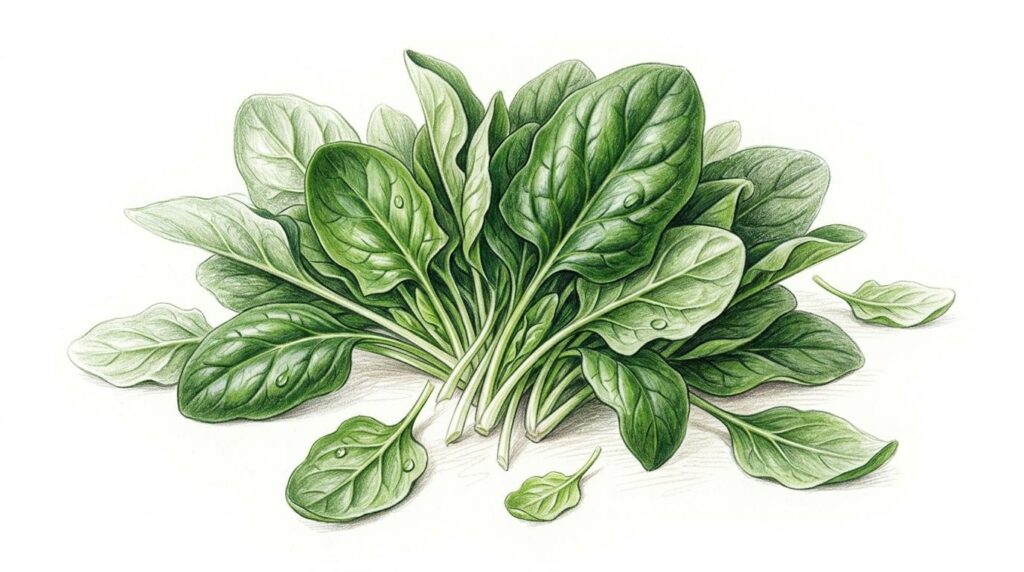
One of the most persistent myths in gout dietary advice is that spinach is dangerous.
It’s not. And the research is clear on this.
For years, spinach appeared on “foods to avoid” lists alongside organ meats, anchovies, and beer. The reasoning was simple: spinach contains purines, purines convert to uric acid, therefore spinach must be bad for gout.
That logic falls apart when you look at the actual studies. Plant purines and animal purines behave very differently in your body.
Let me show you why spinach deserves a place on your plate, not your blacklist.
Why Spinach Got a Bad Reputation
Older dietary guidelines treated all purines the same. A purine was a purine, regardless of whether it came from chicken liver or a salad leaf.
Spinach contains roughly 50-70mg of purines per 100g. By vegetable standards, that’s moderate to high. So it got flagged.
The problem? Nobody tested whether those plant purines actually raised uric acid levels. They just assumed.
Then the research caught up.
The Studies That Changed Everything
The most significant study was published in the New England Journal of Medicine. It tracked over 47,000 men for 12 years, looking at diet and gout risk.
What they found
Meat and seafood consumption significantly increased the risk of gout. Purine-rich vegetable consumption did not.
Not “slightly less risk.” No statistically significant increase at all.
A subsequent BMJ study confirmed the finding. Researchers specifically looked at high-purine vegetables including spinach, mushrooms, peas, and asparagus. None were associated with increased uric acid levels or gout risk.
This wasn’t a single study making a bold claim. Multiple large-scale studies reached the same conclusion.
Why plant purines don’t trigger gout
Several factors are likely at play.
Different purine types
Animal proteins are loaded with hypoxanthine, a purine type that converts very efficiently to uric acid. Plant purines have a different composition and appear to be metabolised through different pathways.
The whole food package
Spinach doesn’t just contain purines. It contains fibre, vitamins, minerals, and antioxidants that may help modulate how purines are processed. You eat the whole food, not isolated purines.
Vitamin C effect
Spinach provides vitamin C, which research suggests may help support uric acid excretion through the kidneys. The food that’s supposedly bad for gout may actually be helping with uric acid management.
What You Get from Spinach
Here’s the nutritional profile of 100g of raw spinach.
- Purines: 50-70mg (does not raise uric acid per research)
- Vitamin C: 28mg
- Folate: 194mcg
- Potassium: 558mg
- Magnesium: 79mg
- Iron: 2.7mg
- Fibre: 2.2g
- Calories: 23
That’s an outstanding nutrient-to-calorie ratio. Spinach is one of the most nutrient-dense foods available.
Cutting it out based on an outdated purine concern means giving up all these benefits for zero gain.
The Oxalate Issue (Not the Same as Gout)
Here’s where things sometimes get confused.
Spinach is high in oxalates. For people prone to calcium oxalate kidney stones, moderating high-oxalate foods may be advisable.
But calcium oxalate kidney stones and gout are different conditions with different mechanisms.
Oxalates = calcium oxalate kidney stone risk in susceptible people
Purines = uric acid levels and gout risk
Some gout sufferers are also at higher risk for uric acid kidney stones, but these are different from calcium oxalate stones. The oxalate content in spinach is irrelevant to your gout management.
If you have both gout and a history of calcium oxalate kidney stones, talk to your doctor about oxalate intake specifically. But don’t avoid spinach for your gout. The science doesn’t support it.
How Spinach Compares to Other Vegetables
All vegetables are effectively safe for gout management, regardless of their purine content. Here’s the data.
| Vegetable | Purines per 100g | Gout Risk |
|---|---|---|
| Asparagus | 20-25mg | No increased risk |
| Mushrooms | 40-60mg | No increased risk |
| Spinach | 50-70mg | No increased risk |
| Peas | 50-70mg | No increased risk |
| Cauliflower | 40-50mg | No increased risk |
| Broccoli | 20-25mg | No increased risk |
The research is consistent across all purine-containing vegetables. None of them increase gout risk.
This is one of the most important things I can tell anyone managing gout: do not restrict vegetables. They’re some of the best foods you can eat.
Raw vs Cooked: Does It Matter?
Cooking concentrates spinach dramatically. A large handful of raw leaves cooks down to just a couple of tablespoons.
So cooked spinach has more purines per serving volume than raw.
Raw spinach (salad serving, ~60g): roughly 30-42mg purines
Cooked spinach (half cup, ~90g): roughly 45-63mg purines
Since plant purines don’t raise uric acid anyway, this distinction is academic. Eat spinach however you prefer.
But if the purine numbers still make you uneasy, raw spinach in salads gives you a naturally lower number per serve while you build confidence in the research.
Practical Ways to Eat Spinach
Since spinach is completely fine for gout, here’s how to make it a regular part of your diet.
Baby spinach salad
The easiest option. A big bowl of baby spinach with grilled chicken, cherry tomatoes, cucumber, and a lemon dressing. High protein, low risk, and ready in minutes.
Green smoothie
Blend a handful of spinach with banana, frozen berries, and Greek yoghurt. The fruit masks the spinach flavour completely. You get the nutrients without tasting a leaf.
Spinach and eggs
Baby spinach wilted into scrambled eggs or an omelette. Eggs are very low in purines, making this one of the safest protein-rich meals for gout.
Sauteed garlic spinach
Garlic, olive oil, a big bag of spinach, two minutes in a pan. Serve alongside fish or chicken for a nutrient-packed dinner.
Spinach in curries and stews
Stir through a handful of spinach at the end of cooking any curry or stew. It wilts in seconds and adds vitamins without changing the flavour profile.
What Should You Actually Worry About?
Since spinach isn’t the issue, let’s refocus on the foods that research has actually linked to gout.
Confirmed gout triggers:
- Organ meats (liver, kidney, sweetbreads)
- Anchovies, sardines, herring
- Mussels and certain shellfish
- Red meat in excess
- Fructose-sweetened drinks (soft drinks, fruit juices with added sugar)
- Alcohol, particularly beer and spirits
These are the foods that consistently raise uric acid levels in research. Spinach has never appeared on this list in any well-controlled study.
The Bottom Line
Spinach is not bad for gout. The research is definitive on this point.
Plant purines don’t raise uric acid levels the way animal purines do. Multiple large-scale studies have shown that purine-rich vegetables carry no increased gout risk.
Spinach is loaded with vitamin C, folate, potassium, and magnesium. It’s one of the most nutritious foods you can eat. Avoiding it because of an outdated purine myth is doing yourself a disservice.
Eat it freely. In salads, smoothies, stir-fries, omelettes, and as a side dish.
Then turn your attention to the foods that actually matter for gout: organ meats, excessive red meat, certain seafood, alcohol, and sugar-sweetened drinks.
That’s where the evidence points. Follow the evidence.
This article is for informational purposes only and is not intended as medical advice. Consult your healthcare provider before making changes to your health routine.

URICAH! Uric Acid Support
4.85 / 5
read 2,290 customer reviews
$39 AUDTHIS IS YOUR URICAH MOMENT
Our 14 potent, natural ingredients support the body in lowering uric acid levels, alleviating the excruciating pain and discomfort caused by gout.
URICAH™ features powerful ingredients used over thousands of years to fight gout such as Tart Cherry, Celery Seed and Chanca Piedra.
Get back on your feet and live pain free with URICAH™.
LEARN MORE