
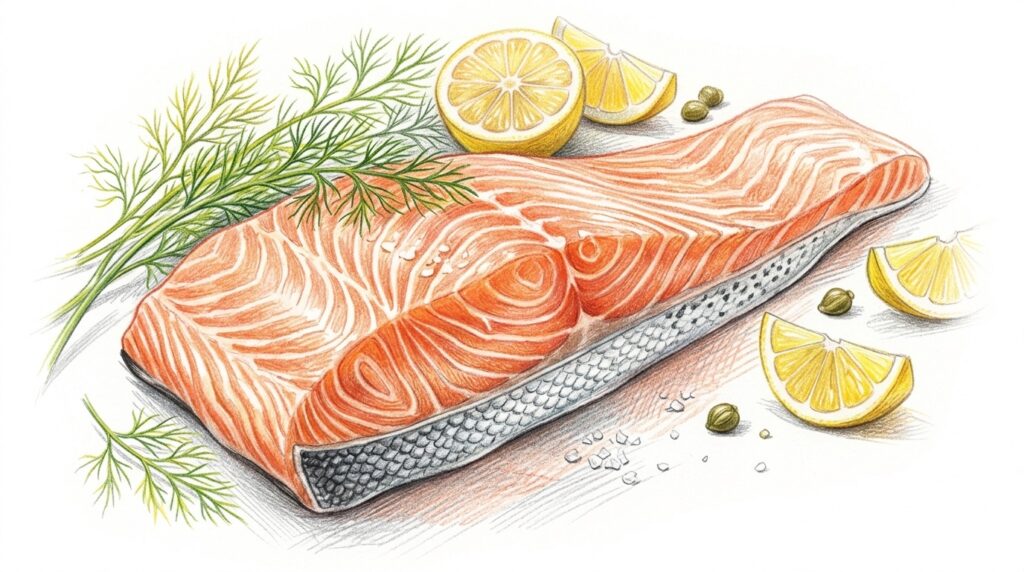
Salmon and gout. It’s one of the most common questions from people managing the condition, and for good reason. Salmon is one of the most popular fish in Australia.
The concern makes sense. You know seafood can be a problem with purines. You’ve probably read conflicting advice.
Here’s the straight answer: salmon purine content sits in the moderate category. It’s not a free pass, but it’s not off-limits either.
For most people managing gout, salmon is a net positive when eaten sensibly.
Where Salmon Sits on the Purine Scale
Salmon contains moderate levels of purines. It’s higher than white fish like basa, whiting, or flake, but significantly lower than high-purine fish like anchovies, sardines, or herring.
To put it in context:
- Low-purine fish (basa, whiting, flake): eat freely
- Moderate-purine fish (salmon, ocean trout): eat in controlled amounts
- High-purine fish (anchovies, sardines, herring): avoid or eliminate
Salmon is firmly in the middle. It needs management, not elimination.
Why Salmon Is Worth Keeping in Your Diet
Here’s what makes salmon different from other moderate-purine foods: it brings genuine health benefits that actively support gout management.
Omega-3 fatty acids
Salmon is one of the richest sources of omega-3s available. These fatty acids have well-documented anti-inflammatory properties. Gout is an inflammatory condition. Anything that helps reduce systemic inflammation is working in your favour.
Vitamin D
Many Australians are surprisingly low in vitamin D, even with all our sunshine. Vitamin D plays a role in immune function and inflammation regulation. Salmon is one of the best dietary sources.
Vitamin B12
Essential for nerve function and energy metabolism. Salmon delivers it in abundance.
High-quality protein
Salmon provides complete protein without the purine load of red meat or organ meats. If you’re looking to shift your protein sources away from beef and lamb, salmon is one of the best replacements.
The nutritional profile of salmon means it’s actively beneficial in ways that outweigh the moderate purine content for most people.
How Much Salmon Is Safe
The practical guidelines are straightforward.
Frequency
Once or twice per week. That gives you the omega-3 benefits without accumulating excessive purines.
Portion size
About 100g per serving. That’s roughly the size of a deck of cards or the palm of your hand. It doesn’t look like a lot, but when it’s part of a balanced plate with vegetables and grains, it’s plenty.
The maths works out
Two 100g serves of salmon per week delivers meaningful omega-3 intake while keeping your weekly purine load well within safe territory, especially if your other meals are based around low-purine proteins like chicken, eggs, and white fish.
When to Avoid Salmon
There are situations where even moderate-purine foods should be pulled back.
During active attacks
If you’re in the middle of a gout flare-up, this is not the time to eat salmon or any moderate-purine food. Stick to low-purine options, drink plenty of water, and let the attack resolve. Your body is already struggling to process uric acid during a flare. Don’t add to the load.
If you’re having frequent flare-ups
Multiple attacks in a short period suggests your uric acid management needs tightening across the board. Pull back to low-purine foods only until things stabilise, then reintroduce moderate options like salmon gradually.
If your uric acid levels are significantly elevated
Work with your GP to get your levels tested. If they’re well above the target range, a stricter dietary approach makes sense until they come down.
How to Prepare Salmon for Gout
Keep it simple. The less you add, the better.
Best methods
Grill it with a squeeze of lemon. Bake it in the oven with herbs. Steam it. Poach it in a light broth. Pan-sear it in a small amount of olive oil.
All of these keep the dish lean and let the fish do the work.
What to avoid
Smoked salmon carries a higher purine load than fresh. It’s also typically high in sodium, which doesn’t help if you’re managing blood pressure alongside gout.
Deep-fried salmon, salmon in creamy sauces, or salmon sushi drowning in soy sauce all add complications you don’t need.
Drink water with your meal
This is a consistent theme in gout management, and it matters. Water helps your kidneys flush uric acid. Have a big glass before, during, and after your salmon meal.
Pair It With the Right Foods
What you eat alongside salmon makes a difference.
Vegetables
Fill half your plate with non-starchy vegetables. Steamed broccoli, a green salad, roasted capsicum and zucchini. The fibre supports your body’s ability to manage uric acid.
Low-fat dairy
A side of low-fat yoghurt or a glass of milk. Dairy proteins have been shown to help lower uric acid levels.
Whole grains
Brown rice, quinoa, or wholegrain bread. These provide sustained energy without the purine spike.
A plate of grilled salmon, steamed greens, and brown rice with a big glass of water is about as close to a perfect gout-friendly meal as you’ll find.
The Bottom Line
Salmon is not a gout trigger in the way that anchovies, organ meats, or beer are.
It’s a moderate-purine food that belongs among the best foods for gout when managed properly, with significant anti-inflammatory and nutritional benefits.
Once or twice a week, 100g portions, simply prepared, paired with vegetables, and washed down with water. That’s the approach.
Avoid it during active flare-ups. Stick to foods that won’t trigger a flare and pull back if your attacks are frequent. Otherwise, keep it in your rotation.
If you’re looking for additional natural support alongside diet, I created URICAH with 14 clearly labelled natural ingredients to help support healthy uric acid levels. Over 2,200 customer reviews and a 90-day money-back guarantee.
Salmon is one of the good ones. Just be smart about how you eat it.
This article is for informational purposes only and is not intended as medical advice. Consult your healthcare provider before making changes to your health routine.

URICAH! Uric Acid Support
4.85 / 5
read 2,290 customer reviews
$39 AUDTHIS IS YOUR URICAH MOMENT
Our 14 potent, natural ingredients support the body in lowering uric acid levels, alleviating the excruciating pain and discomfort caused by gout.
URICAH™ features powerful ingredients used over thousands of years to fight gout such as Tart Cherry, Celery Seed and Chanca Piedra.
Get back on your feet and live pain free with URICAH™.
LEARN MORE