
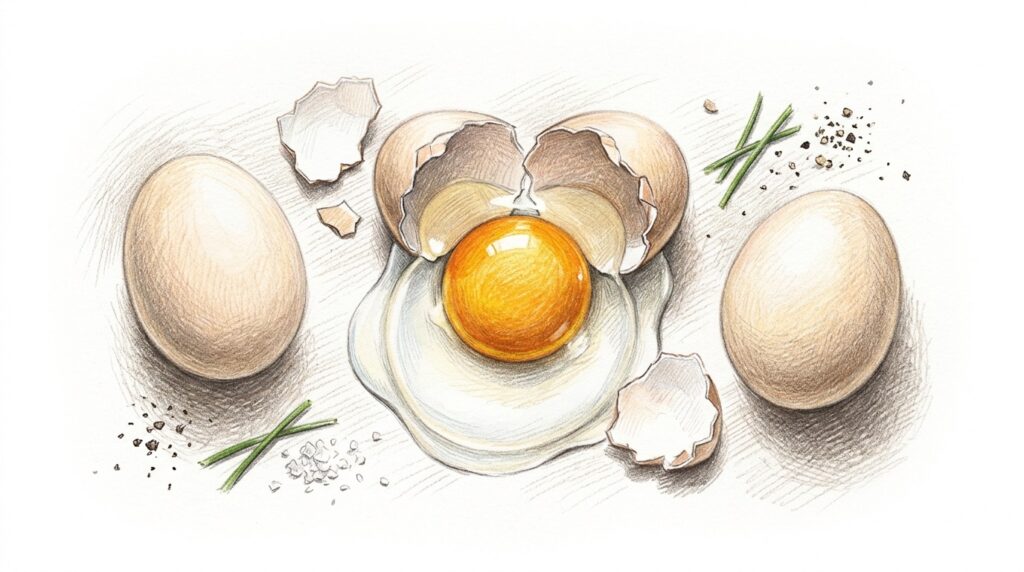
If you’re managing gout and constantly worrying about which proteins are safe, here’s the short answer: eggs and gout get along just fine.
Eggs have virtually zero purines, around 0mg per 100g, making them one of the safest protein sources you can eat. Full stop.
Yet most people managing gout obsess over which meats to avoid and completely overlook the humble egg sitting in their fridge.
That’s a mistake.
Eggs are cheap, versatile, packed with nutrients, and they won’t nudge your uric acid levels at all. They’re the unsung hero of gout management, and it’s time they got the credit they deserve.
Why Eggs Are So Safe
The reason is simple: eggs contain almost no purines.
Purines are the compounds your body breaks down into uric acid. High-purine foods like organ meats, red meat, and certain seafood can spike your uric acid because they flood your system with purines.
Eggs do none of that.
A single large egg contains roughly 0-2mg of purines. Compare that to:
- Beef liver: 300+ mg per 100g
- Mussels: 112-170mg per 100g
- Steak: 100-130mg per 100g
- Eggs: approximately 0mg per 100g
The difference isn’t marginal. It’s enormous.
How Many Eggs Per Day?
For years, eggs got a bad reputation because of cholesterol concerns. That’s largely been debunked.
Current research shows that dietary cholesterol from eggs has minimal impact on blood cholesterol for most people.
From a gout perspective, there’s no practical limit driven by purine content. The purines are negligible no matter how many you eat.
Practical recommendation
- 2-3 eggs per day is perfectly fine for most people
- If you have specific cholesterol concerns, talk to your GP, but for gout management, eggs are a non-issue
- Some people eat 4-6 eggs daily without any impact on uric acid levels
The key point: you’ll never eat enough eggs for the purine content to matter.
Preparation Doesn’t Change Much
Unlike some foods where cooking method significantly affects purine content, eggs are simple. The purine content is so low that it barely changes regardless of how you prepare them.
All of these are fine:
- Scrambled
- Poached
- Boiled (soft or hard)
- Fried (keep the oil moderate)
- Baked
- In omelettes or frittatas
The only thing to watch is what you add to them. Frying eggs in butter with a side of bacon and sausages turns a low-purine meal into a high-purine one.
The eggs aren’t the problem; it’s the company they keep.
Eggs as a Meat Replacement
This is where eggs really shine for gout management.
Every meal where you swap out a high-purine protein for eggs is a win.
Practical swaps
Breakfast
Instead of bacon and sausages, have scrambled eggs on toast with avocado and tomatoes. You’re swapping 100+ mg of purines for essentially zero.
Lunch
Instead of a beef burger, make an egg salad sandwich. Add some leafy greens, a bit of mayo, salt, and pepper. Simple, filling, and purine-free.
Dinner
A vegetable frittata with eggs, capsicums, onion, and sweet potato is a complete meal with almost no purines. Pair it with a side salad and you’ve got a dinner that’s better for your gout than most meat-based meals.
The Nutritional Bonus
Eggs aren’t just safe for gout. They’re genuinely nutritious.
- High-quality protein. Around 6g per egg, with all essential amino acids
- Vitamin D. Important for bone health and immune function
- B vitamins. Particularly B12 and riboflavin
- Choline. Essential for brain function, and most people don’t get enough
- Selenium. Supports thyroid function and acts as an antioxidant
You’re not just avoiding purines. You’re eating one of the most nutrient-dense foods available.
Common Questions
Do egg yolks have more purines than egg whites?
Both the yolk and the white are extremely low in purines. There’s no meaningful difference. Eat the whole egg.
Are free-range eggs better for gout?
From a purine perspective, no. Free-range, cage-free, and conventional eggs all have the same negligible purine content. Buy free-range for ethical and taste reasons, not because of purines.
Can eggs actually help lower uric acid?
Eggs don’t actively lower uric acid, but by replacing high-purine proteins in your diet, they indirectly reduce your overall purine intake. That’s a practical benefit even if it’s not a direct pharmacological one.
The Bottom Line
Eggs are one of the most underrated foods for anyone managing gout.
Almost zero purines, high-quality protein, affordable, versatile, and available at every supermarket in Australia. You can eat them every day without worrying.
If you’re struggling to find safe protein sources, start with eggs. Build meals around them. Use them to replace the high-purine proteins that are actually causing problems.
For more on which proteins are safe and which to avoid, read our guides on chicken and gout, best fish for gout, and the best foods for gout.
Looking for support beyond what’s on your plate? I created URICAH with 14 natural ingredients at transparent dosages to help maintain healthy uric acid levels. No proprietary blends. Over 2,200 customer reviews. Free shipping across Australia, and a 90-day money-back guarantee.
This article is for informational purposes only and is not intended as medical advice. Consult your healthcare provider before making changes to your health routine.

URICAH! Uric Acid Support
4.85 / 5
read 2,290 customer reviews
$39 AUDTHIS IS YOUR URICAH MOMENT
Our 14 potent, natural ingredients support the body in lowering uric acid levels, alleviating the excruciating pain and discomfort caused by gout.
URICAH™ features powerful ingredients used over thousands of years to fight gout such as Tart Cherry, Celery Seed and Chanca Piedra.
Get back on your feet and live pain free with URICAH™.
LEARN MORE