
Are brussels sprouts bad for gout?
Not at all.
They get a bad reputation, mostly from people who had them boiled to mush as a kid. But if you’ve got gout and you’re looking for low-purine vegetables that actively support your uric acid management, brussels sprouts deserve a second look.
Brussels sprouts are very low in purines, high in vitamin C, and packed with fibre.
That’s a useful combination.
The Purine Numbers
Let’s start with the facts.
Brussels sprouts contain less than 50mg of purines per 100g. That puts them in the very low purine category.
For perspective, organ meats like liver contain 300-400mg per 100g. Sardines are over 200mg. Even moderate-purine foods like some red meats sit around 100-150mg.
Brussels sprouts aren’t even in the conversation when it comes to purine risk.
They’re well below the threshold that matters for gout.
And remember, plant purines don’t affect uric acid levels the same way animal purines do. Research consistently shows that vegetable consumption, even moderate-purine vegetables, is not associated with an increased risk of gout.
People who eat more vegetables have lower gout rates.
You can eat brussels sprouts without worrying about your uric acid.
Why Brussels Sprouts Actually Help
Brussels sprouts don’t just avoid causing problems.
They bring nutrients that actively support gout management.
Vitamin C: The Uric Acid Lowerer
Brussels sprouts are an excellent source of vitamin C.
A single 100g serve delivers roughly 85mg of vitamin C, which is more than 100% of the recommended daily intake.
Why does this matter for gout?
Vitamin C has been shown in multiple studies to help lower serum uric acid levels. It works by enhancing your kidneys’ ability to excrete uric acid. A meta-analysis of randomised controlled trials found that vitamin C supplementation significantly reduced serum uric acid levels.
Every serve of brussels sprouts is contributing to that effect.
Fibre for Weight Management
Brussels sprouts are high in dietary fibre, roughly 3.8g per 100g.
Fibre supports digestive health, helps you feel full, and plays a direct role in weight management.
This matters for gout because excess body weight is one of the strongest risk factors for high uric acid levels. Fat tissue produces more uric acid, and carrying extra kilos makes your kidneys less efficient at clearing it.
Foods that help you maintain a healthy weight are, by extension, foods that help you manage gout.
Brussels sprouts tick that box.
Anti-inflammatory Compounds
Brussels sprouts are cruciferous vegetables, the same family as broccoli, cauliflower, and cabbage.
Cruciferous vegetables contain sulforaphane and other compounds with demonstrated anti-inflammatory and antioxidant properties.
Gout is an inflammatory condition at its core. Uric acid crystals form in your joints and trigger an intense inflammatory response. Anything that helps moderate background inflammation is working in your favour.
Folate and Potassium
Brussels sprouts also deliver good amounts of folate and potassium.
Potassium supports kidney function, and since your kidneys are responsible for excreting roughly two-thirds of your body’s uric acid, keeping them working well is essential.
How to Cook Brussels Sprouts for Gout
The cooking method matters, not for purine content, but for making them something you’ll actually want to eat regularly.
Boiled brussels sprouts are grim. There are better ways.
Roasted with olive oil
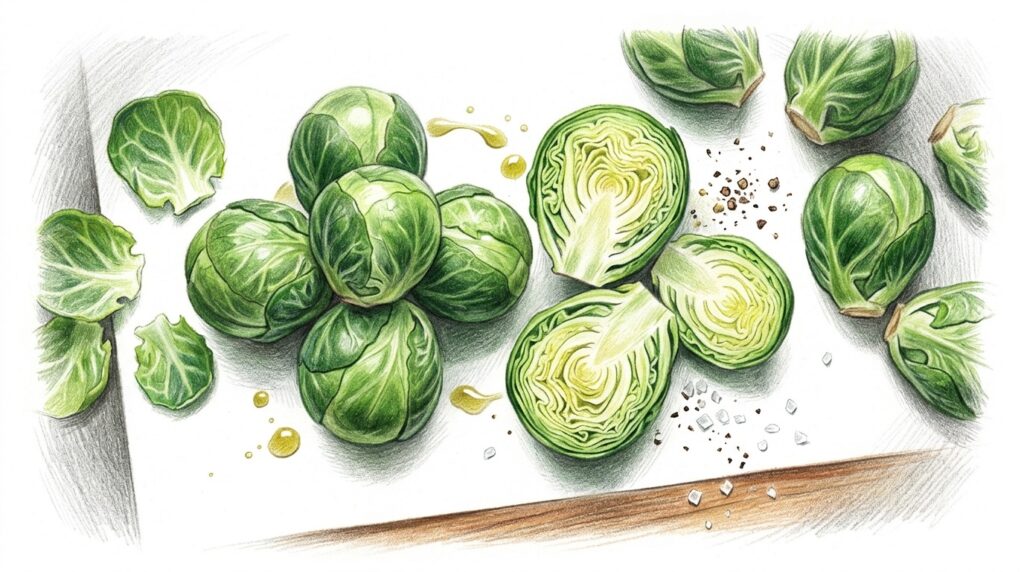
Cut them in half, toss with olive oil, salt, and pepper, and roast at 200 degrees until they’re golden and crispy on the edges. This is the method that converts brussels sprout haters. The caramelisation brings out a natural sweetness that’s completely different from boiled.
Pan-fried
Halve them and cook cut-side down in a hot pan with olive oil until charred. Finish with a squeeze of lemon. Quick, flavourful, and easy.
Steamed
If you want to keep things simple, steam them until just tender, not mushy. About 6-8 minutes. A bit of butter and pepper is all you need.
Shaved raw in salads
Slice them thin and use as a salad base. Toss with lemon juice, olive oil, shaved parmesan, and toasted almonds. A completely different texture and flavour from cooked.
What to avoid
Don’t drown them in cream sauce, cheese, or bacon bits. All of those add saturated fat, excess calories, or purines that undermine the benefits. Keep the preparation clean and let the vegetable do the work.
Other Low-Purine Vegetables to Include
Brussels sprouts are excellent, but variety matters.
Here are other vegetables in the same low-risk category that you should rotate through your week:
- Broccoli – another cruciferous powerhouse, high in vitamin C
- Capsicums – exceptionally high in vitamin C
- Carrots – low purines, high in beta-carotene
- Pumpkin – an Australian staple, versatile and filling
- Sweet potato – low purines, high fibre
- Zucchini – very low purines, easy to cook
- Leafy greens – spinach, kale, silverbeet, rocket
- Green beans – simple, reliable, low-purine
See the full guide to vegetables and gout
The pattern is clear. Vegetables are the safest food group for gout, and eating a wide variety of them is one of the smartest dietary moves you can make.
Fit It Into a Broader Strategy
No single vegetable is going to solve your gout.
Brussels sprouts are helpful, but they work best as part of a complete approach.
Stay hydrated.
2-3 litres of water daily. More in summer. Dehydration is one of the fastest routes to a gout flare-up, and in Australia’s climate, it’s a constant risk.
Manage the big-ticket items.
Reduce high-purine animal foods, limit alcohol (especially beer), and work on maintaining a healthy weight. These changes have a bigger impact than any single food addition.
Get consistent daily support.
I created URICAH to give people a reliable, natural option for supporting healthy uric acid levels every day. It contains 14 clearly labelled natural ingredients at transparent dosages, including vitamin C, tart cherry extract, celery seed extract, and green coffee bean extract. No proprietary blends. 90-day money-back guarantee. Free shipping across Australia.
Learn about natural gout support strategies
The Bottom Line
Brussels sprouts are a low-purine, high-benefit vegetable that belongs in your gout management diet.
Less than 50mg of purines per 100g. Loaded with vitamin C that actively helps lower uric acid. High in fibre for weight management. Anti-inflammatory compounds from the cruciferous family.
Roast them, pan-fry them, shave them into salads.
Just stop boiling them. They deserve better, and so does your gout management.
This article is for informational purposes only and is not intended as medical advice. Consult your healthcare provider before making changes to your health routine.

URICAH! Uric Acid Support
4.85 / 5
read 2,290 customer reviews
$39 AUDTHIS IS YOUR URICAH MOMENT
Our 14 potent, natural ingredients support the body in lowering uric acid levels, alleviating the excruciating pain and discomfort caused by gout.
URICAH™ features powerful ingredients used over thousands of years to fight gout such as Tart Cherry, Celery Seed and Chanca Piedra.
Get back on your feet and live pain free with URICAH™.
LEARN MORE