
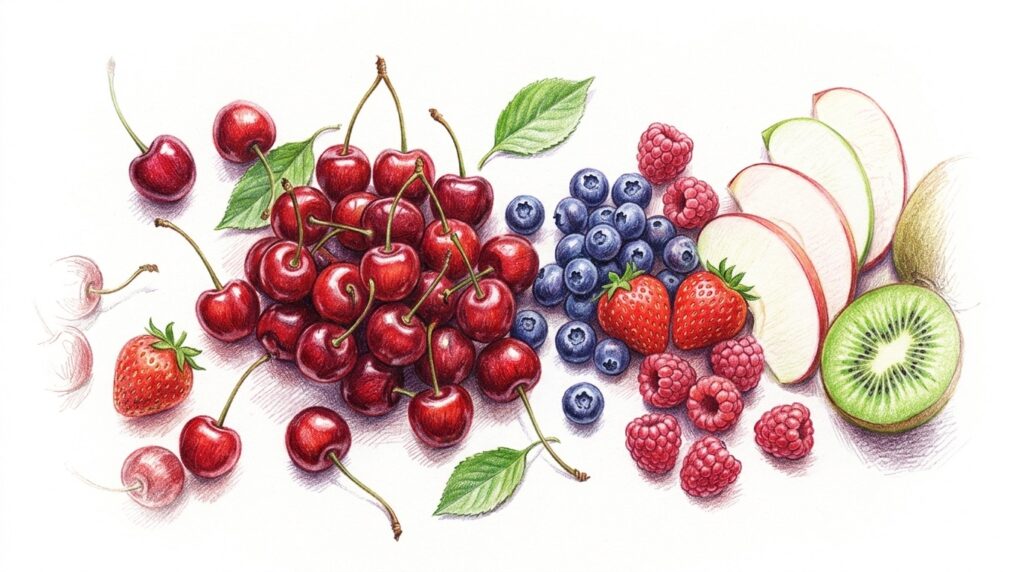
The best fruits for gout are low in purines, rich in vitamin C, and genuinely helpful for managing uric acid.
But not all fruit is equal, and there’s a catch that trips people up.
Fructose.
Fructose is the natural sugar in fruit, and it directly increases uric acid production in your body. This doesn’t mean fruit is bad. It means you need to be smarter about which fruits you eat, how much, and in what form.
Let’s sort this out properly.
Why Fruit Is Generally Good for Gout
Fruit is low in purines. That’s the starting point, and it’s an important one.
Unlike organ meats, shellfish, or beer, fruit doesn’t deliver a purine payload that your body has to convert into uric acid.
Most fruits also deliver things your body genuinely needs for gout management:
- Vitamin C helps lower uric acid levels by improving kidney excretion
- Antioxidants fight the inflammation that drives gout pain
- Fibre supports weight management, which is directly linked to lower uric acid
- Potassium supports kidney function
- Water content contributes to hydration
The issue isn’t fruit itself. It’s concentration and quantity.
The Best Fruits for Gout
These are your go-to options. Low in fructose relative to their other benefits, and in some cases, actively helpful for managing uric acid.
Cherries
The standout. Cherries, particularly tart cherries, have the strongest research behind them for gout specifically. Studies show regular cherry consumption is associated with a significant reduction in gout attacks.
The anthocyanins in cherries have anti-inflammatory properties, and they appear to lower uric acid levels directly.
Eat them fresh when they’re in season. Use frozen tart cherries the rest of the year.
Berries
Strawberries, blueberries, raspberries, and blackberries. All low in fructose relative to their size, packed with antioxidants and vitamin C.
A handful of berries with breakfast or as a snack is one of the simplest good habits you can adopt.
Citrus
Oranges, mandarins, lemons, limes, grapefruit. High in vitamin C, which is one of the most well-researched natural compounds for lowering uric acid.
A couple of pieces of citrus fruit per day is a smart move.
Apples
Moderate fructose, but the fibre content slows absorption. One apple a day is a good rule.
Bananas
Low in purines, high in potassium, and easy to grab on the go. Potassium supports kidney function, which helps your body clear uric acid.
A solid everyday fruit for gout management.
Fruits to Eat in Moderation
These aren’t dangerous, but they’re higher in fructose than the fruits above. Enjoy them, just don’t make them the foundation of your fruit intake.
Grapes
Higher in fructose than most berries. A small bunch is fine, but grazing through an entire punnet in front of the telly will add up fast.
Mangoes
Delicious, especially in an Australian summer, but among the highest-fructose common fruits. Stick to a few slices rather than eating a whole mango in one sitting.
Pineapple
Contains bromelain, which has anti-inflammatory properties, so it’s not all bad. But it’s also high in sugar. A couple of pieces as part of a mixed fruit salad works well.
What to Avoid
This is where most people get it wrong. It’s not the whole fruit that causes problems. It’s the concentrated forms.
Fruit juice
A glass of orange juice contains the fructose of three or four oranges, with none of the fibre to slow absorption. Your body gets hit with a concentrated fructose load, and uric acid production spikes.
Swap juice for whole fruit. Every time.
Dried fruit
Same principle. Dried apricots, sultanas, dates, and cranberries are concentrated sugar. The water is gone, but the fructose is all still there, packed into a much smaller volume.
A small handful is fine occasionally. A bag of dried mango is not.
Fruit-flavoured drinks and smoothie bowls
Many of these contain added sugar or multiple fruit sources blended together. A smoothie with banana, mango, pineapple, and apple juice could deliver more fructose in one serve than you should have in a whole day.
How Much Fruit Should You Eat?
Two serves of whole fruit per day.
That’s the practical target. One serve is roughly a medium piece of fruit (an apple, a banana, an orange) or a cup of smaller fruit (berries, grapes, chopped melon).
Two serves gives you the vitamins, antioxidants, and fibre your body needs without overloading on fructose.
Tips for getting it right:
- Choose whole, fresh fruit over juice or dried
- Combine fruit with protein or fibre (yoghurt with berries, apple with a handful of nuts) to slow fructose absorption
- Prioritise the beneficial fruits: cherries, berries, citrus
- Spread your fruit across the day rather than eating it all at once
- Frozen fruit counts and is often more affordable than fresh, especially for berries
Where Fruit Fits in Your Gout Management
Fruit is one piece of a bigger strategy. It’s a good piece, particularly cherries and berries, but it won’t do the heavy lifting on its own.
Hydration matters more
Drink 2-3 litres of water daily, more in the Australian heat. No amount of fruit will compensate for chronic dehydration.
Overall diet matters
Reducing high-purine foods, limiting alcohol (especially beer), and maintaining a healthy weight will have a bigger impact than any single food choice.
Consistent support helps
I created URICAH to provide daily, natural support for healthy uric acid levels. It includes tart cherry extract alongside 13 other clearly labelled ingredients at transparent dosages. No proprietary blends. 90-day money-back guarantee. Free shipping across Australia.
Learn about natural ways to support healthy uric acid levels
The Bottom Line
Fruit is generally your friend when you have gout. Just be smart about it.
Stick to whole fruit. Prioritise cherries, berries, and citrus. Limit the high-fructose options. Avoid juice and dried fruit as daily habits.
Two serves a day is the sweet spot.
Get that right, and fruit becomes part of the solution.
This article is for informational purposes only and is not intended as medical advice. Consult your healthcare provider before making changes to your health routine.

URICAH! Uric Acid Support
4.85 / 5
read 2,290 customer reviews
$39 AUDTHIS IS YOUR URICAH MOMENT
Our 14 potent, natural ingredients support the body in lowering uric acid levels, alleviating the excruciating pain and discomfort caused by gout.
URICAH™ features powerful ingredients used over thousands of years to fight gout such as Tart Cherry, Celery Seed and Chanca Piedra.
Get back on your feet and live pain free with URICAH™.
LEARN MORE