
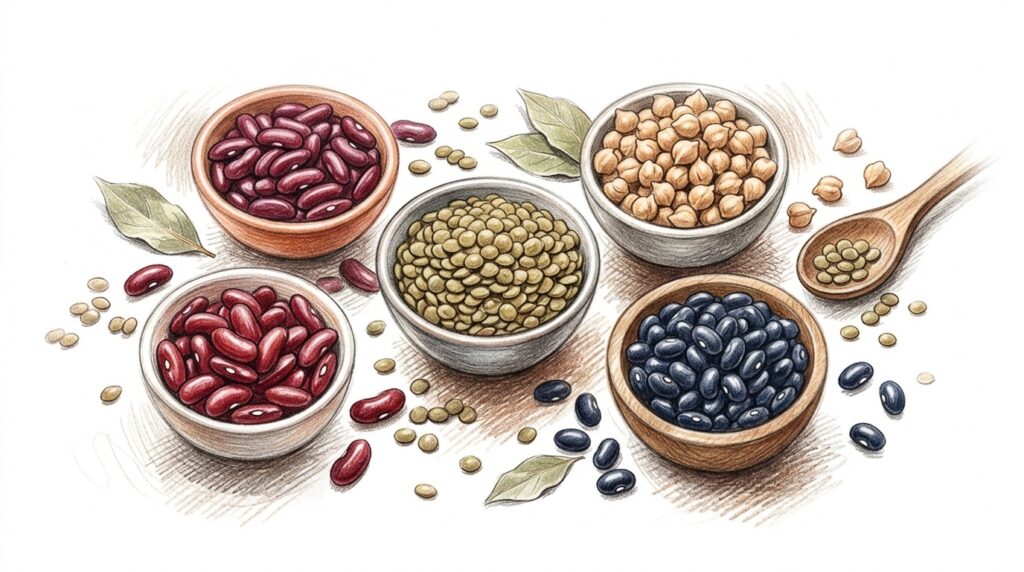
Beans and gout have a complicated reputation.
If you’ve ever searched for what to eat when managing gout, you’ve probably seen legumes on the “avoid” list right next to red meat and organ meats.
That advice is outdated, and the research doesn’t support it.
Here’s what actually matters: beans, lentils, and legumes contain moderate levels of purines, but plant-based purines do not raise uric acid levels the same way animal purines do.
Multiple large studies have confirmed this.
The purines in a bowl of lentil soup are not the same threat as the purines in a steak.
If you’ve been avoiding legumes because you thought they were dangerous, you’ve been cutting out one of the best protein alternatives available.
Why Plant Purines Are Different
This is the key point, and it changes everything.
Research consistently shows that purine-rich plant foods, including beans, lentils, peas, and spinach, have little to no effect on the risk of gout flare-ups. The Arthritis Foundation, the Mayo Clinic, and multiple peer-reviewed studies all agree on this.
Why the difference?
The purines in animal foods (particularly adenine and hypoxanthine) are more bioavailable, meaning your body absorbs and converts them into uric acid more efficiently.
Plant purines appear to be processed differently, with less conversion to uric acid and potentially better excretion through the kidneys.
In simple terms: your body handles plant purines better than animal purines. The science is clear on this.
Purine Content by Legume
Not all legumes are equal, so here’s a practical breakdown per half-cup cooked serving.
Lowest purine legumes
- Chickpeas: approximately 19mg purines
- Lima beans: approximately 49mg purines
- Red kidney beans: approximately 55mg purines
- Pinto beans: approximately 57mg purines
Moderate purine legumes
- Small white beans: approximately 60mg purines
- Split peas: approximately 63mg purines
- Soybeans: approximately 65mg purines
- Lentils: approximately 74mg purines
- Black-eyed peas: approximately 72mg purines
For context, even the highest legume on this list (lentils at 74mg per half-cup) contains fewer purines than a 100g serving of chicken breast.
And remember, those plant purines behave differently in your body anyway.
Legumes as a Protein Alternative
This is where legumes become genuinely useful for gout management.
If you’re trying to reduce your intake of high-purine meats and seafood, you need replacement protein sources. Legumes are one of the best options.
What legumes give you:
- High protein (around 15-18g per cup of cooked lentils or beans)
- High fibre (supports gut health and overall wellbeing)
- Low cost (significantly cheaper than meat)
- Long shelf life (dried or canned, they last for months)
- Versatile in cooking (soups, curries, salads, stews, dips)
Compare that to the other low-purine protein sources: eggs and dairy are both excellent, but you can’t eat eggs and cheese at every meal. Legumes give you variety.
Practical AU Advice
Legumes might not be the first thing you think of in Australian cooking, but they’re more common than you realise.
Easy ways to include them
Chickpeas
Whack a can into a curry, roast them with spices for a snack, or blend them into hummus. Chickpeas are the lowest-purine legume and the most versatile.
Lentils
Red lentils cook in 15-20 minutes and dissolve into soups and curries beautifully. Green and brown lentils hold their shape for salads and side dishes.
Kidney beans
A staple in chilli, nachos, and bean salads. Canned kidney beans are perfectly fine; just rinse them first. Grab a tin from Woolies or Coles and you’re sorted.
Baked beans
Yes, even the canned ones from the supermarket. They’re low-purine, high-protein, and ready in two minutes. Just watch the sugar content on cheaper brands.
The combination trick
Pair legumes with grains (rice, bread, pasta) and you get a complete protein profile without any animal products.
A lentil dal with rice is a nutritionally complete meal with minimal purine impact.
What About Soy Products?
Tofu, tempeh, and edamame are all soy-based and fall into the legume family. They’re moderate in purines but, again, plant purines.
Research shows no increased gout risk from soy consumption.
Tofu is especially useful because it’s bland enough to absorb any flavour you throw at it. Stir-fry it, crumble it into a scramble, or add it to soups. It’s a practical protein that won’t challenge your uric acid levels.
The Bottom Line
Stop avoiding beans and lentils because of outdated purine charts.
The research is clear: plant purines don’t trigger gout flare-ups the way animal purines do. Legumes are safe, nutritious, affordable, and one of the best protein alternatives when you’re cutting back on meat.
Start with chickpeas and red lentils if you’re new to cooking with legumes. They’re forgiving, fast, and go with almost everything.
For more on which proteins are safe, read our guides on eggs and gout, chicken and gout, and the best foods for gout.
Looking for support beyond what’s on your plate? I created URICAH with 14 natural ingredients at transparent dosages to help maintain healthy uric acid levels. No proprietary blends. Over 2,200 customer reviews. Free shipping across Australia, and a 90-day money-back guarantee.
This article is for informational purposes only and is not intended as medical advice. Consult your healthcare provider before making changes to your health routine.

URICAH! Uric Acid Support
4.85 / 5
read 2,290 customer reviews
$39 AUDTHIS IS YOUR URICAH MOMENT
Our 14 potent, natural ingredients support the body in lowering uric acid levels, alleviating the excruciating pain and discomfort caused by gout.
URICAH™ features powerful ingredients used over thousands of years to fight gout such as Tart Cherry, Celery Seed and Chanca Piedra.
Get back on your feet and live pain free with URICAH™.
LEARN MORE