
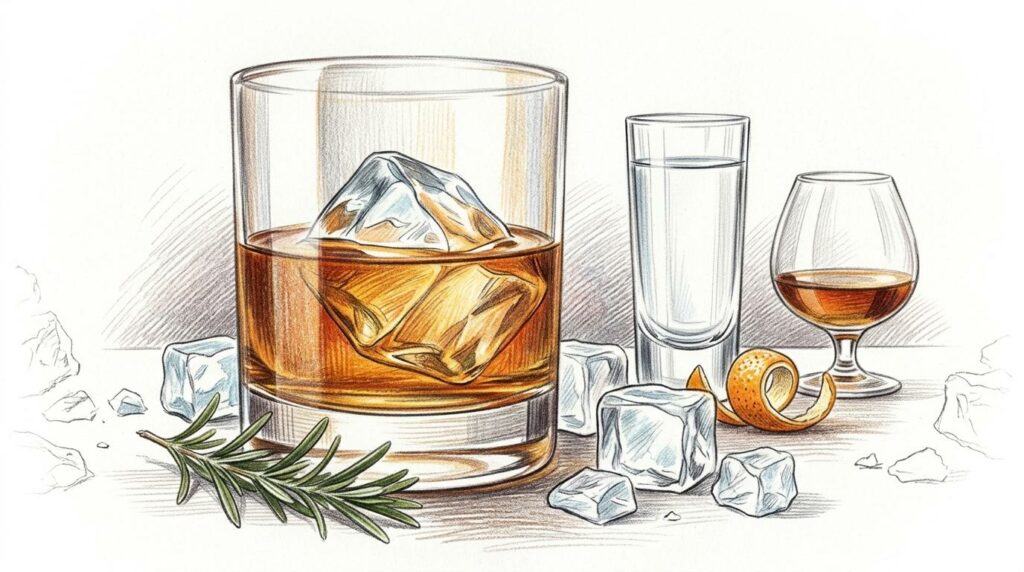
The question comes up constantly.
“I’ve stopped drinking beer. Can I switch to whiskey?”
It’s the right instinct. Beer is the worst alcoholic drink for gout by a wide margin, and switching to something less harmful makes sense. But spirits aren’t a free pass. They still affect your uric acid levels, just through a different mechanism and to a lesser degree.
Here’s the full picture on whiskey, vodka, rum, gin, and every other spirit, so you can make an informed choice.
How All Spirits Affect Gout
Every spirit shares one fundamental problem with every other form of alcohol.
Ethanol impairs your kidneys’ ability to excrete uric acid. When your body metabolises alcohol, it produces lactic acid and other byproducts that compete with uric acid for excretion through the renal tubules. Your kidneys have a limited processing capacity, and alcohol effectively pushes uric acid to the back of the queue.
The result: uric acid stays in your bloodstream instead of being flushed out. Levels rise. Crystals can form. Flares can follow.
Research shows that two or more standard drinks of spirits per day is associated with a 1.6x increased risk of gout. Significant, but substantially less than beer, which more than doubles the risk due to its additional purine content.
Why Spirits Are Better Than Beer (But Not Good)
The distinction is important.
Beer delivers a double hit: high purine content from the brewing process plus alcohol blocking uric acid excretion. That combination is why beer is in a league of its own for gout risk.
Spirits contain negligible purines. The distillation process strips them out. So spirits only deliver a single hit: the alcohol effect on kidney excretion.
One hit versus two. That’s why switching from beer to spirits is a genuine improvement, even though it’s not the same as cutting alcohol entirely.
Spirit-by-Spirit Breakdown
Different spirits have different chemical compositions. Here’s what the research tells us about each.
Whiskey
Whiskey has produced one of the more surprising findings in the research. A study found that whiskey consumption may increase uric acid excretion by approximately 27%. The mechanism isn’t fully understood, but it may relate to specific compounds produced during the ageing process that promote renal urate clearance.
This doesn’t mean whiskey is good for gout. It still contains ethanol, which impairs overall kidney function. The 27% excretion boost doesn’t fully offset the alcohol effect. But it does suggest that whiskey may be marginally less problematic than other spirits at equivalent doses.
Whether you drink Scotch, bourbon, Irish, or Japanese whiskey, the core ethanol effect is the same. The differences in grain base and ageing don’t meaningfully change the gout equation.
Vodka
Vodka is the simplest spirit: essentially ethanol and water after distillation and filtration. No purines, minimal congeners (the chemical compounds responsible for flavour and colour in other spirits), no fructose.
From a gout perspective, vodka is as clean as spirits get. The only concern is the ethanol itself.
The catch: vodka is rarely consumed straight. It’s almost always mixed. A vodka and cranberry contains 20 to 30 grams of sugar. A vodka and cola is loaded with fructose. Those mixers raise uric acid through a completely separate pathway, the fructose-ATP depletion mechanism. Vodka with soda water and a squeeze of lime is a fundamentally different proposition from vodka with fruit juice.
Gin
Gin is essentially flavoured vodka infused with juniper berries and other botanicals. The botanical compounds don’t meaningfully alter the uric acid picture. Juniper has some traditional associations with kidney health, but there’s no robust evidence that it makes gin better or worse than vodka for gout.
Watch the mixer. A gin and tonic contains roughly 8 to 10 grams of sugar from the tonic water alone. Gin with soda water and fresh lime is the better option.
Rum
Rum is distilled from sugarcane or molasses. Despite the sugary origins, distillation removes most of the sugar. The ethanol effect is comparable to other spirits.
Dark rums contain more congeners than white rums, which doesn’t significantly affect uric acid but does worsen hangovers and can compound dehydration effects.
The real problem with rum is what it’s usually paired with. Rum and cola is one of Australia’s most popular mixed drinks, and the cola adds a massive fructose load. A rum and soda water is a far better choice for your gout.
Brandy and Cognac
Grape-based spirits with no significant purine content after distillation. Their gout impact is comparable to other spirits at equivalent alcohol doses. They tend to be consumed in smaller quantities, which naturally limits the damage.
Ranking Spirits: Least to Most Harmful for Gout
Based on available evidence:
- Whiskey (potentially least harmful due to excretion-promoting effect, though evidence is limited)
- Vodka (cleanest profile, lowest congener content)
- Gin (similar to vodka, minimal added risk from botanicals)
- Brandy/Cognac (equivalent to vodka/gin, typically consumed in smaller amounts)
- Rum (similar ethanol effect, but culturally paired with high-sugar mixers in Australia)
The differences between spirits are genuinely small. What you mix them with, and how many you have, matters far more than which spirit you choose.
Your Mixer Matters More Than Your Spirit
This is where the real damage happens for most people.
A standard shot of spirits contains roughly 10 grams of alcohol (one Australian standard drink) and zero sugar. Add cola, and you’ve just added 10 to 15 grams of fructose. Add fruit juice, and it’s even worse.
Fructose raises uric acid through a completely different mechanism than alcohol. It triggers ATP depletion in the liver, which breaks down purines and produces uric acid directly. So a spirit with a sugary mixer hits you twice, just like beer does, through alcohol blocking excretion and fructose driving production.
Mixers to avoid:
- Cola and soft drinks (high fructose)
- Fruit juices (concentrated fructose)
- Tonic water (8 to 10 grams of sugar per serve)
- Pre-mixed cans and bottles (often very high in sugar)
- Energy drinks
Mixers that work:
- Soda water (zero sugar)
- Sparkling mineral water
- A squeeze of fresh lime or lemon (negligible fructose)
- Diet tonic (if you need the tonic flavour)
Switching from rum-and-cola to rum-and-soda-water is one of the simplest changes you can make for your gout. Same spirit, completely different impact.
The Full Alcohol Hierarchy for Gout
Where spirits sit in the bigger picture of alcohol and gout:
Beer (worst)
Double hit: high purines plus blocked excretion. 2x or greater risk increase. Craft beers and ales are worse than light lagers.
Spirits (middle)
Single hit: blocked excretion only (assuming sugar-free mixers). 1.6x risk at two or more daily drinks.
Wine (least harmful)
Some studies show no significant gout risk increase at moderate consumption. May contain beneficial polyphenols. Still impairs excretion at higher amounts.
If you’ve been a regular beer drinker and you switch to spirits with soda water, you’ve eliminated the purine hit entirely. That’s a meaningful improvement.
Practical Guidelines for Spirits and Gout
Here’s how to minimise the impact.
Stick to one to two standard drinks per occasion.
An Australian standard drink is 10 grams of alcohol, roughly one 30ml nip of spirits. Research shows meaningful risk increases above two standard drinks.
Always use sugar-free mixers.
Soda water with fresh lime. Make it your default. This is the single most impactful change after limiting quantity.
Match every drink with a glass of water.
Alcohol is a diuretic. Dehydration concentrates uric acid and impairs kidney function. Alternating between your drink and water keeps your kidneys working.
Don’t pair spirits with high-purine meals.
A whiskey alongside a surf-and-turf dinner is compounding the problem. Alcohol impairs excretion while the meal adds to the purine load. If you’re drinking, pair it with lower-purine food options.
Space your drinking sessions.
Two drinks on Saturday is better than one drink on Friday and one on Saturday. Your kidneys need recovery time between alcohol exposures.
Skip the pre-mixed options.
Pre-mixed spirit cans and bottles are convenient but typically loaded with sugar. Pour your own with soda water, and you control what goes in.
Supporting Your Body Through Smart Choices
When I created URICAH, I designed it around the specific mechanisms that matter most for uric acid management, including supporting kidney excretion, which is exactly what alcohol interferes with.
No supplement reverses the effect of heavy drinking. Biology doesn’t work that way.
But if you’re making the smart choices, limiting your intake, choosing spirits over beer, using sugar-free mixers, staying hydrated, then targeted supplementation gives your body additional support for the processes that keep uric acid in check.
It’s the combination that works. Better choices plus proper support equals better outcomes. That’s the approach I see working for URICAH customers across Australia.
Read about natural ways to manage gout
Learn what to look for in a gout supplement
This article is for informational purposes only and is not intended as medical advice. Consult your healthcare provider before making changes to your health routine.

URICAH! Uric Acid Support
4.85 / 5
read 2,290 customer reviews
$39 AUDTHIS IS YOUR URICAH MOMENT
Our 14 potent, natural ingredients support the body in lowering uric acid levels, alleviating the excruciating pain and discomfort caused by gout.
URICAH™ features powerful ingredients used over thousands of years to fight gout such as Tart Cherry, Celery Seed and Chanca Piedra.
Get back on your feet and live pain free with URICAH™.
LEARN MORE