
Gout is an invisible condition. Until it is not.
Tophi are what happens when gout becomes visible. They are lumps of crystallised uric acid that form under your skin, around your joints, and in your soft tissues. They can grow slowly over years, sometimes reaching the size of a golf ball.
They are your body making the invisible visible. And if you have them, they are sending a very clear message.
What are tophi?
A tophus (plural: tophi) is a deposit of monosodium urate crystals in body tissue.
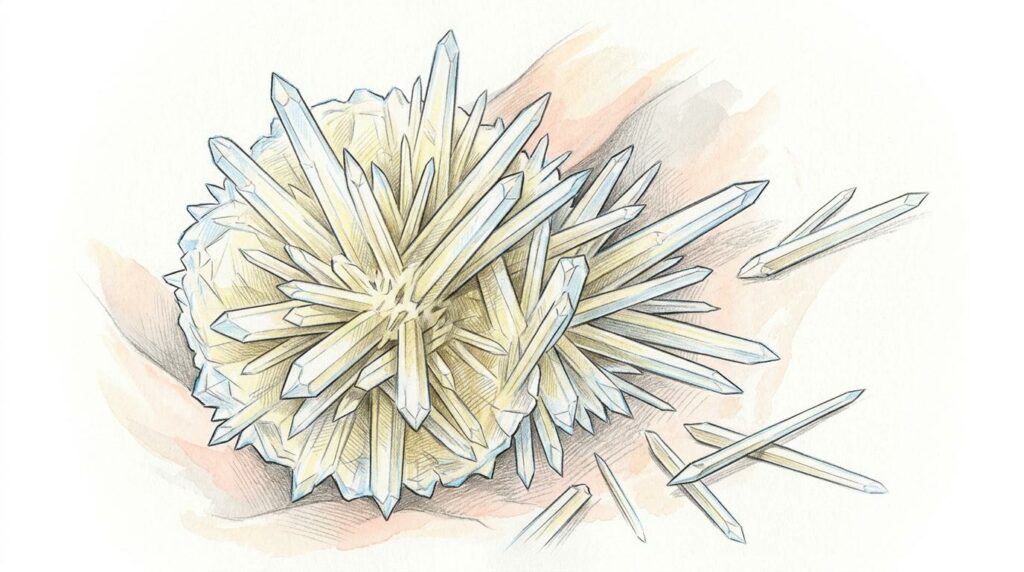
These are the exact same needle-shaped crystals that cause the searing pain of a gout flare. But while flares are temporary inflammatory events, tophi represent a long-term accumulation.
When uric acid stays above approximately 6.8 mg/dL for extended periods, the blood becomes saturated. It simply cannot hold all the uric acid in dissolved form. The excess crystallises out and deposits in tissues.
Over time, these deposits grow into visible nodules.
The material inside a tophus is chalky and white. If a tophus breaks through the skin, which can happen in advanced cases, it looks like white chalk paste or toothite. That is pure crystallised uric acid.
Where do tophi appear?
Tophi favour locations that are cooler and have less blood flow. Urate crystals precipitate more readily at lower temperatures.
The most common sites include:
- Big toe joint
- Fingers and finger joints
- Elbows, especially the bony point (olecranon bursa)
- Wrists
- Achilles tendon
- The rim of the ear (helix)
- Knees
- Feet and ankles
The ears are worth highlighting. They have minimal blood flow and are among the coolest parts of your body. Small tophi on the ear are sometimes the earliest visible sign that uric acid has been chronically elevated.
Many people have tophi in multiple locations simultaneously.
Recognising tophi
Tophi can be subtle early on and dramatic later. Knowing what to look for at each stage helps.
Early stage
Small, firm nodules under the skin. They may be the size of a pea or smaller. Usually painless. Often dismissed as cysts, ganglions, or normal bony prominences.
The overlying skin typically looks normal at this point.
Intermediate stage
Nodules grow larger and become more obvious. The skin may take on a yellowish or whitish hue as the chalky deposit shows through.
They feel firm and gritty when pressed. Nothing like a fluid-filled cyst.
Chronic aching or tenderness around the deposit may develop, even between gout flares.
Advanced stage
Large, visible lumps that can distort joint shape. Skin may become stretched and thin over the deposit.
In some cases, the tophus erodes through the skin, creating an open wound that weeps white, chalky material. These wounds heal poorly and are vulnerable to infection.
At this stage, tophi are unmistakable. But ideally, you address them well before they get here.
Why tophi are more than a cosmetic problem
It is tempting to think of tophi as unsightly but harmless. They are not.
Joint destruction
Tophi grow within joint spaces. As they expand, they erode cartilage and bone.
X-rays of joints with tophi show characteristic “punched out” erosions, areas where the crystal deposits have eaten into the bone itself.
This structural damage causes chronic pain, loss of range of motion, and in severe cases, joint deformity that cannot be fully reversed even after the tophi dissolve.
Tendon damage
Tophi deposits in or near tendons weaken the tissue. The Achilles tendon is particularly vulnerable. In rare cases, tendon rupture can occur.
Nerve compression
Crystal deposits near nerves can create compression syndromes. Tophi in the hand, for example, can mimic carpal tunnel syndrome.
Infection risk
When tophi break through the skin, bacteria can enter. Infected tophi are a medical emergency requiring antibiotics and sometimes surgical drainage.
Disability
Large tophi on the hands make gripping difficult. Tophi on the feet make walking painful and wearing shoes challenging. Daily tasks become harder.
This is not an abstract concern. Advanced tophaceous gout can be genuinely disabling.
How long does it take for tophi to develop?
Tophi are a sign that uric acid has been elevated for years. Most commonly, they appear after at least five to ten years of sustained hyperuricaemia.
However, the timeline is not fixed. People with very high uric acid levels, impaired kidney function, or certain genetic factors can develop tophi faster.
Some people have elevated uric acid for decades without developing visible tophi. Others develop them within a few years of their first gout flare. Individual variation is significant.
The important point is that tophi mean you have been above the crystallisation threshold for a considerable time. They are a marker of chronicity.
For a full explanation of what different uric acid levels mean, see our guide on uric acid levels explained.
The underlying problem
Tophi form because uric acid production exceeds excretion over a sustained period.
Your body produces uric acid as a byproduct of purine metabolism. Normally, roughly two-thirds is excreted through the kidneys and one-third through the gut.
When this balance tips, either because you are producing too much or excreting too little, levels rise. Above approximately 6.8 mg/dL, crystallisation becomes possible.
Common factors that contribute include:
- Chronic kidney impairment (reduced excretion)
- Genetic predisposition to uric acid overproduction or underexcretion
- Medications that reduce uric acid clearance, particularly diuretics (covered in our guide on medications that raise uric acid)
- Chronic dehydration (concentrates uric acid)
- High-purine diet
- Excessive alcohol, especially beer
- Obesity and insulin resistance
For a broader picture of gout signs and indicators, see our guide on gout symptoms.
Can tophi be reversed?
Yes. This is the most important section of this article.
Tophi can be dissolved. Completely. The crystallised uric acid can be redissolved back into the blood and excreted by your kidneys.
But it requires sustained lowering of uric acid levels below the saturation threshold.
Target levels for tophi dissolution
The standard target for dissolving tophi is a serum uric acid level below 5 mg/dL (0.30 mmol/L). Some guidelines set the bar at below 6 mg/dL (0.36 mmol/L), but the lower target works faster.
At these levels, the crystallised uric acid in tophi gradually dissolves back into the bloodstream and is cleared by the kidneys.
How long does it take?
Small tophi may dissolve within a few months once target levels are achieved.
Large tophi can take one to two years or longer.
The critical factor is consistency. Uric acid must stay below target continuously. Each spike above the threshold allows recrystallisation and slows progress.
Think of it like a block of salt in water. If the water is dilute enough, the salt dissolves. But if you periodically add more salt, the block reforms. Consistent low levels are what dissolve tophi permanently.
Medical treatment for tophi
If you have tophi, you almost certainly need urate-lowering therapy (ULT).
Allopurinol is the most commonly prescribed option. It works by inhibiting xanthine oxidase, the enzyme that produces uric acid. It is effective, well-studied, and available in Australia through the PBS.
Febuxostat works through the same mechanism but may be used when allopurinol is not tolerated.
Probenecid takes a different approach, increasing uric acid excretion through the kidneys rather than reducing production.
Your doctor will choose the appropriate medication and dose based on your specific situation, kidney function, and the severity of your tophi.
Regular blood tests to monitor uric acid levels are essential. The goal is to achieve and maintain the target level long-term.
Surgical removal may be necessary in cases where tophi are causing acute nerve compression, skin breakdown with infection, or severe functional impairment. But surgery treats the symptom, not the cause. Without uric acid management, tophi will return.
What you can do alongside medical treatment
Lifestyle strategies support medical therapy and may help you reach target levels with lower medication doses.
Stay well hydrated
Adequate hydration keeps uric acid in solution and supports kidney excretion. Aim for at least 2 litres of water daily, more in hot weather.
Our guide on dehydration and gout explains why this is non-negotiable.
Manage your weight
Excess weight increases uric acid production through higher purine turnover and insulin resistance.
Gradual weight loss, 0.5 to 1 kilogram per week, can significantly support lower uric acid levels. Avoid crash diets, which spike uric acid through rapid tissue breakdown.
See our guide on obesity, weight, and gout.
Reduce dietary triggers
Limiting high-purine foods, cutting back on sugar (especially fructose), and moderating alcohol intake all contribute to lower uric acid levels.
Consider natural support
Certain compounds may complement your medical treatment. Tart cherry extract, quercetin, and vitamin C have evidence supporting their role in uric acid management.
Our guide on natural ways to manage gout covers the research.
Manage stress
Chronic stress raises cortisol, which promotes tissue breakdown and impairs kidney function. Both raise uric acid.
Our guide on stress and gout offers practical strategies.
Women and tophi
Tophi are less common in women, but not unheard of. Oestrogen has a uricosuric effect, meaning it helps the kidneys excrete uric acid. After menopause, when oestrogen levels drop, women’s gout risk increases significantly.
Post-menopausal women on diuretics are at particular risk.
Our guide on gout and women covers this in detail.
Do not wait
Tophi are a late-stage sign. They mean uric acid has been too high for years.
But late does not mean too late.
With proper treatment, tophi dissolve. Joints can be preserved. Function can be maintained. The damage that has not yet occurred can be prevented.
The biggest mistake people make with tophi is waiting. Waiting to see the doctor. Waiting to start medication. Waiting for the problem to go away on its own.
It will not go away on its own. Uric acid that is high enough to form tophi will stay high unless you actively manage it.
Get tested. Get treated. Stay consistent.
Your body gave you a clear signal. Act on it.
This article is for informational purposes only and is not intended as medical advice. Consult your healthcare provider before making changes to your health routine.

URICAH! Uric Acid Support
4.85 / 5
read 2,290 customer reviews
$39 AUDTHIS IS YOUR URICAH MOMENT
Our 14 potent, natural ingredients support the body in lowering uric acid levels, alleviating the excruciating pain and discomfort caused by gout.
URICAH™ features powerful ingredients used over thousands of years to fight gout such as Tart Cherry, Celery Seed and Chanca Piedra.
Get back on your feet and live pain free with URICAH™.
LEARN MORE