
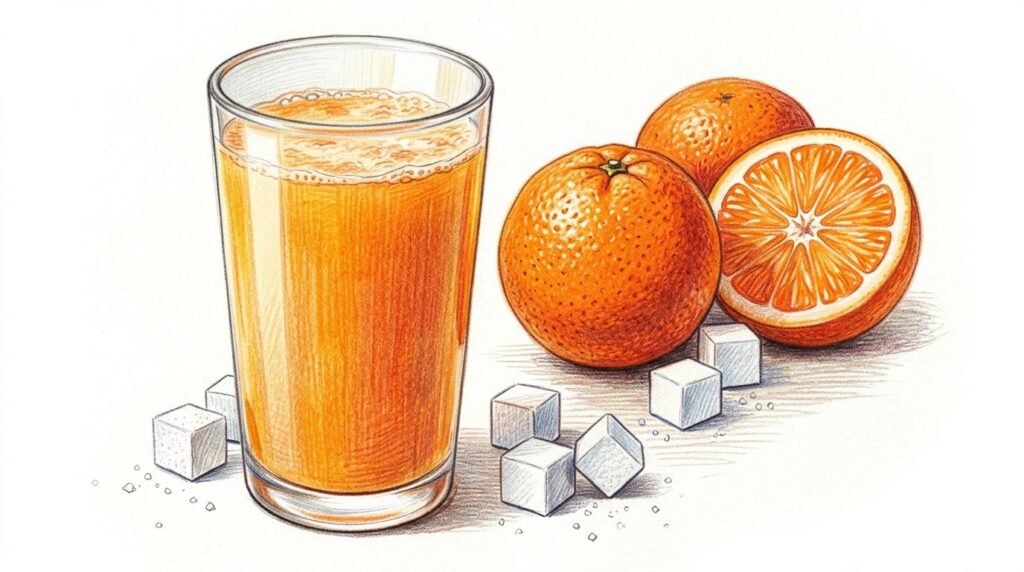
Every morning, millions of Australians pour themselves a glass of orange juice and feel good about it.
Vitamin C. Natural. From fruit. Surely it’s helping.
Except it’s not. When it comes to gout and uric acid, orange juice is one of the sneakiest saboteurs in your fridge. And the reason comes down to a paradox that most people, and even some health professionals, don’t fully appreciate.
The Fructose Problem
Let’s start with what makes orange juice deceptive.
Vitamin C genuinely supports lower uric acid levels. There’s solid research showing that vitamin C supplementation helps your kidneys excrete uric acid. A meta-analysis of randomised controlled trials demonstrated a mean reduction of 0.35 mg/dL with vitamin C supplementation.
Orange juice contains vitamin C. Logic says it should help.
But orange juice also contains a massive amount of fructose. And fructose is one of the most potent dietary triggers for uric acid production.
Here’s the biochemistry in plain English. When fructose hits your liver, it rapidly depletes ATP (your cells’ energy currency). This triggers a cascade that breaks down purines, which produces uric acid as a byproduct. Unlike glucose, fructose bypasses normal metabolic regulation, meaning it generates uric acid quickly and in large quantities.
The fructose effect doesn’t just offset the vitamin C benefit. It overwhelms it completely.
The Research Is Damning
A major study published in JAMA in 2010 tracked over 78,000 women. Those who consumed two or more servings of orange juice per day had a 2.4 times greater risk of elevated uric acid compared to those who rarely drank it.
More than double the risk. From “healthy” orange juice.
Research presented to the American College of Rheumatology pushed the numbers even higher: participants consuming three or more sugar-sweetened beverages daily (including fruit juice) showed a 3.93 times greater risk of gout flares.
And here’s the part that should really concern you. Research from New Zealand’s University of Otago and University of Auckland has shown that fructose interferes with the SLC2A9 gene, one of the key genetic regulators of uric acid transport in the kidneys. Fructose doesn’t just produce more uric acid; it actively impairs your body’s ability to remove it.
That’s the same double-hit mechanism that makes beer the worst alcoholic drink for gout. More uric acid coming in, less going out.
The Fructose Content in Numbers
A standard 250ml glass of orange juice contains roughly 21 grams of sugar. Approximately half is fructose, giving you about 10 to 11 grams per glass.
For context, a 250ml glass of Coca-Cola contains about 27 grams of sugar. Orange juice isn’t the health food the marketing suggests.
The critical difference between juice and whole fruit is fibre. When you eat an orange, the fibre slows fructose absorption dramatically. Your liver handles it gradually. Juice strips away the fibre and delivers a concentrated fructose hit straight to the liver.
Two glasses of OJ delivers roughly the same fructose as eating four to five whole oranges, but arrives in minutes instead of being slowly released during an hour of chewing and digestion.
Every Fruit Juice Has This Problem
Orange juice gets the most attention, but the issue extends to virtually all fruit juices:
- Apple juice is actually worse. A 250ml glass contains roughly 13 to 15 grams of fructose, making it one of the highest-fructose common beverages.
- Grape juice is similarly loaded, with roughly 20 grams of fructose per 250ml.
- Fruit smoothies from juice bars can be the worst of all. They often combine multiple high-fructose fruits with juice as a base. A large commercial smoothie can pack 50 to 70 grams of sugar.
- Cranberry juice cocktails are typically loaded with added sugar. Pure unsweetened cranberry juice is very tart and lower in fructose, but that’s not what most people buy.
The pattern is the same across the board. Juice removes the fibre and concentrates the fructose. That’s the problem.
Whole Fruits Are a Different Story
I’m not telling you to avoid all fruit. That would be wrong.
Whole fruits are genuinely beneficial for gout management.
The fibre in whole fruit controls fructose absorption. The water content supports hydration. Many fruits contain compounds that actively help manage uric acid and inflammation.
Research consistently shows that moderate whole fruit consumption is associated with lower gout risk, not higher. It’s the concentrated juice form that causes trouble.
Fruits that may support gout management:
- Cherries (especially tart cherries, available as unsweetened cherry juice)
- Berries (strawberries, blueberries, blackberries)
- Whole citrus fruits (oranges, mandarins, grapefruit)
- Kiwifruit (high in vitamin C and fibre)
Fruits to eat in moderation:
- Grapes (higher fructose)
- Mangoes (higher fructose)
- Dried fruits (concentrated fructose with no water content)
Eat the fruit. Ditch the juice.
The Vitamin C Trap
Some people insist on drinking OJ specifically for the vitamin C.
That logic falls apart under scrutiny.
One glass of orange juice contains roughly 70mg of vitamin C. The research showing meaningful uric acid reductions used doses of 500mg or more daily.
To hit an effective dose from juice alone, you’d need to drink seven glasses a day. The fructose load from seven glasses would send your uric acid levels through the roof. The vitamin C benefit would be completely erased and then some.
If you want vitamin C’s uric acid benefits, take a supplement or eat whole fruits and vegetables. Capsicums, kiwifruit, broccoli, and strawberries are excellent sources without the concentrated fructose delivery.
This is exactly why I included vitamin C as an active ingredient when I created URICAH. The research supports it, but only when it’s not packaged with 11 grams of fructose per serve.
What to Drink Instead
You have better options that genuinely support gout management:
- Water is non-negotiable. Proper hydration keeps your kidneys flushing uric acid efficiently.
- Coffee has consistent evidence for supporting lower uric acid levels.
- Green tea provides antioxidants that may help with uric acid management.
- Low-fat dairy contains proteins that directly promote uric acid excretion.
- Unsweetened tart cherry juice offers anti-inflammatory compounds and evidence for supporting healthy uric acid levels.
What’s not on the list: fruit juice, soft drinks, energy drinks, or any sweetened beverage.
Making the Switch
I understand that habits are hard to break. If orange juice has been part of your morning routine for years, dropping it feels like a sacrifice.
Reframe it.
You’re not losing something healthy. You’re removing something that was making your gout worse while pretending to help. That’s not sacrifice; it’s common sense.
Replace your morning juice with a whole orange and a glass of water. You get the vitamin C, the fibre, and proper hydration. You skip the concentrated fructose hit.
If you miss the flavour, try sparkling water with a squeeze of fresh citrus. The fructose content from a wedge of lemon or orange is negligible compared to a full glass of juice.
The Bottom Line
Orange juice raises uric acid and increases gout risk despite its vitamin C content. The research shows a 2.4x increase at just two servings daily.
This applies to apple juice, grape juice, smoothies, and all concentrated fructose sources.
Here’s your action list:
- Cut daily fruit juice from your routine
- Eat whole fruits instead, especially cherries, berries, and citrus
- Get vitamin C from supplements or whole food sources
- Replace juice with water, coffee, tea, or low-fat dairy
- Check labels on any drink marketed as healthy; look at the sugar content first
That glass of orange juice at breakfast isn’t supporting your health. It’s feeding the exact metabolic pathway that drives your gout. Swap it out, and you remove one of the most common hidden triggers.
Read about natural ways to manage gout
Learn what to look for in a gout supplement
This article is for informational purposes only and is not intended as medical advice. Consult your healthcare provider before making changes to your health routine.

URICAH! Uric Acid Support
4.85 / 5
read 2,364 customer reviews
$39 AUDTHIS IS YOUR URICAH MOMENT
Our 14 potent, natural ingredients support the body in lowering uric acid levels, alleviating the excruciating pain and discomfort caused by gout.
URICAH™ features powerful ingredients used over thousands of years to fight gout such as Tart Cherry, Celery Seed and Chanca Piedra.
Get back on your feet and live pain free with URICAH™.
LEARN MORE