
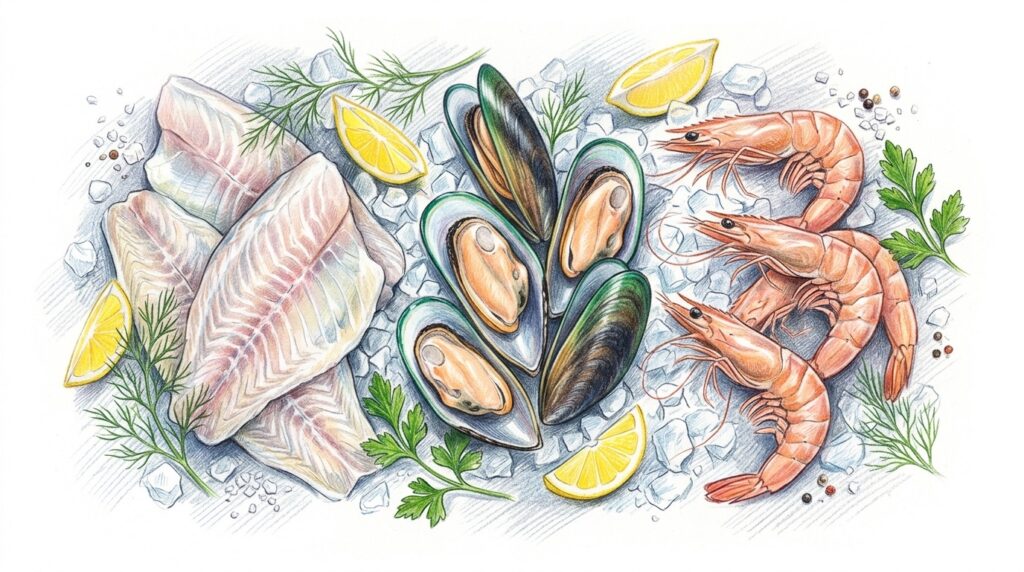
Seafood and gout is one of the most confusing topics in gout management.
You’ll read advice that says “avoid all seafood” and other advice that says “eat more fish for the omega-3s.” Both can’t be right. And neither is completely wrong.
The reality is that seafood varies wildly in purine content.
Lumping low-purine barramundi in with high-purine anchovies is like saying all vehicles are the same because they have wheels. A bicycle and a road train are different things.
Some seafood is genuinely safe. Some needs careful management. And some should stay off your plate.
Here’s how to sort it out.
Low-Risk Seafood: Eat Freely
White, non-oily fish are your best friends. They’re low in purines, high in protein, and an excellent foundation for a gout-friendly diet.
The best choices
Basa, whiting, tilapia, and flake. These are all widely available across Australia and sit firmly in the safe zone.
Barramundi is particularly worth mentioning. It’s a quintessentially Australian fish, mild and versatile, and it’s one of the better choices you can make for protein when managing gout.
Flathead, ling, and John Dory are also solid options.
Why white fish is different
These species store very little fat in their muscle tissue. Lower fat means lower purine concentration. You’re getting lean protein without the uric acid penalty.
You can have white fish three or four times a week without any concern. Make it a regular part of your rotation.
Moderate-Risk Seafood: Manage Your Portions
This is where it gets interesting. These varieties offer genuine nutritional benefits but need portion control and frequency limits.
Oily Fish
Salmon and ocean trout
Both sit in the moderate purine range. They’re higher than white fish, but the omega-3 fatty acids they contain have real anti-inflammatory benefits. For someone managing gout, that’s a meaningful trade-off.
Once or twice a week, around 100g per serve. That’s the sweet spot.
Mackerel
Trickier. In small amounts, it’s fine. Eaten regularly or in larger serves, it edges into high-risk territory. Keep it to an occasional meal rather than a weekly staple.
Shellfish
Prawns, crab, lobster, and scallops
Australians love their shellfish, especially in summer. A prawn cocktail at Christmas, Moreton Bay bugs on a special occasion, a crab at the markets.
Shellfish sits in the moderate-risk category. Not as dangerous as its reputation suggests, but it needs limits.
Once or twice a week in reasonable portions is manageable for most people. But if you’re having a seafood platter loaded with prawns, crab, lobster, and mussels every weekend, you’re accumulating a significant purine load.
The practical approach
Enjoy shellfish occasionally. Don’t make it a regular feature of your weekly diet. And if you’re in an active flare-up or having frequent attacks, pull back on shellfish until things stabilise.
High-Risk Seafood: Avoid
These are the varieties that consistently trigger problems and belong on the foods to avoid list.
Anchovies
Among the highest-purine foods in existence. On pizza, in dressings, from a tin. All problematic.
Sardines
Very high in purines. The fact that they’re “healthy” in other respects doesn’t help if they’re triggering gout attacks.
Herring
High purine content, especially when smoked or pickled.
Mackerel in quantity
As noted above, occasional small serves are manageable. Regular or large serves are not.
Fish roe and caviar
Concentrated purine sources. Any roe-based product, whether it’s expensive caviar or supermarket taramasalata, carries significant risk.
How to Prepare Seafood for Gout
Preparation matters more than most people realise.
The best methods
Grill, steam, poach, or bake your seafood. Simple preparation keeps the dish lean and doesn’t add risk factors.
A piece of grilled barramundi with lemon and steamed vegetables is one of the best meals you can eat for gout management. Simple. Delicious. Low risk.
What to avoid
Battered and deep-fried seafood. Fish and chips, crumbed prawns, tempura. The batter and oil add fat and calories without any benefit.
Preserved seafood is also higher risk. Smoked salmon, salted cod, tinned fish in oil. These all carry higher purine loads than their fresh counterparts. If you’re using tinned fish, choose varieties in spring water.
Pair it right
Serve your seafood with fibre-rich vegetables and a side of low-fat dairy. Both help your body manage uric acid. A grilled fish fillet with a big salad and a glass of water is one of the best foods for gout.
Building a Seafood Routine
Here’s a practical weekly approach:
- White fish (basa, whiting, flake, barramundi): three to four times a week
- Oily fish (salmon, ocean trout): once or twice a week
- Shellfish (prawns, crab, scallops): once a week at most
- High-purine anchovies, sardines, herring, fish roe: avoid
Every serve around 100g. Every meal paired with vegetables. Water with every meal.
This gives you plenty of variety, the health benefits of omega-3s, and a purine load that’s well within manageable range.
The Bottom Line
Seafood is not a single category. Treating it like one means either missing out on genuinely healthy options or eating the wrong varieties too often.
White fish is safe and should be a dietary staple. Oily fish and shellfish are fine in moderation. A handful of high-purine species are best avoided.
If you’re looking for additional support, I created URICAH with 14 clearly labelled natural ingredients to help support healthy uric acid levels. No proprietary blends and a 90-day money-back guarantee.
Learn which seafood works for you. Prepare it simply. Eat it with vegetables and water.
This article is for informational purposes only and is not intended as medical advice. Consult your healthcare provider before making changes to your health routine.

URICAH! Uric Acid Support
4.85 / 5
read 2,290 customer reviews
$39 AUDTHIS IS YOUR URICAH MOMENT
Our 14 potent, natural ingredients support the body in lowering uric acid levels, alleviating the excruciating pain and discomfort caused by gout.
URICAH™ features powerful ingredients used over thousands of years to fight gout such as Tart Cherry, Celery Seed and Chanca Piedra.
Get back on your feet and live pain free with URICAH™.
LEARN MORE