
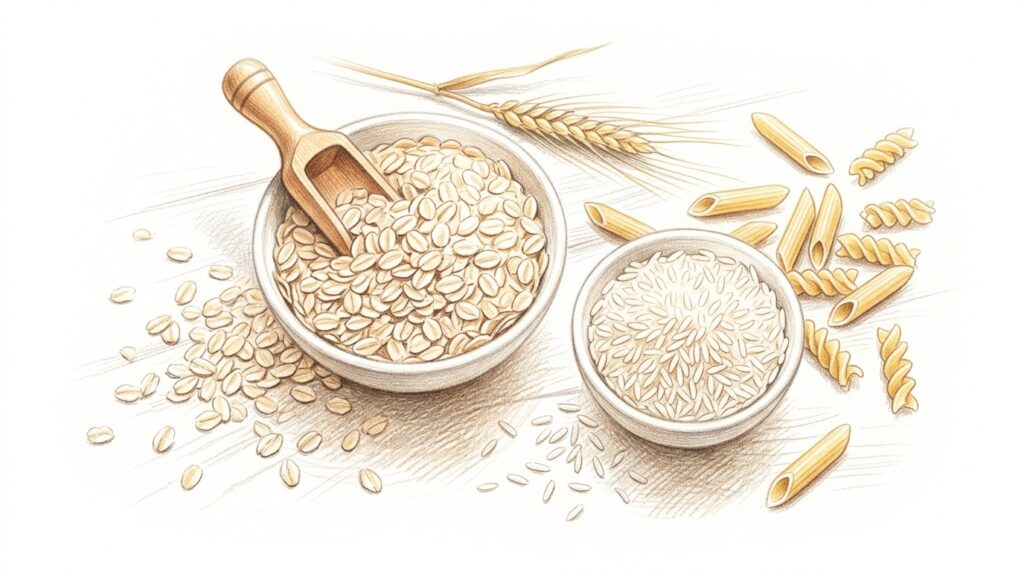
If you’re managing gout, you’ve probably spent a lot of time worrying about meat and seafood. Fair enough.
But at some point you start wondering about the basics. Oatmeal and gout, rice and gout, pasta. Are grains safe? Or are they quietly making things worse?
Here’s the short answer: grains are generally fine.
Oats have moderate purine levels but are safe for most people. Rice and pasta are very low in purines. The real issue with grains isn’t the grains themselves. It’s what you put on them.
Let’s break it down.
Oatmeal: Moderate Purines, Still a Good Choice
Oats contain roughly 50-94mg of purines per 100g of dry oats, which puts them in the low-to-moderate range.
That sounds like a concern until you consider portion size.
A typical bowl of porridge uses about 30-40g of dry oats, which means you’re looking at around 30-40mg of purines per serving. That’s low.
A 2025 study published in Arthritis Care & Research found that people who ate at least one daily serving of whole grain cereal or cooked oatmeal had a significantly lower risk of gout flares.
And a well-known 12-year study of over 47,000 men found that purine-rich plant foods, including oats, did not increase gout risk at all.
So the evidence is clear. A bowl of porridge in the morning is not going to be your problem.
How to eat oatmeal the right way
Stick to plain oats
Rolled oats or steel-cut oats. Not the instant sachets loaded with sugar and flavouring.
Watch what you add
This is where it actually matters.
A bowl of oats topped with fresh fruit, a handful of nuts, and some natural yoghurt is a textbook gout-friendly breakfast. That same bowl loaded with honey, brown sugar, and chocolate chips? Not so much.
Fructose and added sugar drive uric acid production far more than oats ever will.
Portion guidance
Half a cup of dry oats per serving is plenty. That gives you a filling breakfast with minimal purine impact.
Rice: Very Low in Purines
Rice is one of the safest staple foods for anyone managing gout. Both white and brown rice are very low in purines, typically well under 50mg per 100g.
Brown rice vs white rice
Brown rice
Higher in fibre, magnesium, and B vitamins. It takes a bit longer to cook but keeps you fuller for longer and has a lower glycaemic impact. This is your best everyday option.
White rice
Lower in nutrients but still very low in purines. If you prefer white rice, it’s not going to cause problems. The bigger concern with white rice is its effect on blood sugar, not purines.
Basmati and jasmine rice
Both are fine. Basmati has a slightly lower glycaemic index, which makes it a marginally better choice, but the difference is small.
Practical rice meals
Rice bowls with grilled chicken, vegetables, and a simple dressing.
Fried rice with eggs, spring onions, and a splash of soy sauce.
Rice with a low-purine fish like barramundi and steamed greens.
These are all solid, practical meals that won’t push your uric acid levels up.
Pasta: Also Very Low in Purines
Pasta, like rice, is very low in purines. Standard wheat pasta sits well under 50mg per 100g. It’s a safe, affordable staple that forms the base of plenty of quick, easy meals.
The sauce matters more than the pasta
This is the pattern you’ll notice across all grains. The base ingredient is fine. The problem is what goes on top.
Safe options
Tomato-based sauces with vegetables and herbs. Olive oil with garlic and greens. A light pesto. Pasta with grilled chicken and roasted vegetables.
Watch out for
Creamy sauces loaded with processed cheese and butter. Meat-heavy ragu made with high-purine cuts. Processed meat additions like bacon, salami, or sausage.
Whole grain vs refined pasta
Whole grain pasta has more fibre and nutrients. Refined white pasta is lower in fibre but still very low in purines.
Either works. If you can tolerate whole grain, choose it. If you prefer white pasta, don’t stress about it.
Whole Grains vs Refined Grains: Does It Matter?
For purine content specifically, the difference between whole and refined grains is minimal. Both are low.
Where whole grains win is everything else. More fibre, better blood sugar control, more micronutrients.
Since insulin resistance and metabolic health play a role in how your body handles uric acid, whole grains offer a broader benefit beyond just purine content.
Good whole grain options:
- Rolled oats or steel-cut oats
- Brown rice
- Whole grain pasta
- Quinoa
- Barley
- Wholemeal bread
The Real Issue: What Goes ON Your Grains
If there’s one takeaway from this article, it’s this.
Grains aren’t the problem. It’s the toppings, sauces, and additions that cause trouble.
Added sugar, fructose, high-purine meats, processed sauces, and excessive salt are what you need to watch.
A bowl of plain porridge with berries and a drizzle of dairy is a completely different meal from a bowl of sugary instant oats. Same grain. Completely different outcome.
Keep your grains simple and build your meals around low-purine proteins and plenty of vegetables.
The Bottom Line
Oatmeal, rice, and pasta are all safe staples for managing gout.
Oats have moderate purines but are well within safe limits at normal portions. Rice and pasta are very low. Choose whole grain where you can, and put your attention on what you’re adding to the plate, not the grain itself.
For more on building meals that support healthy uric acid levels, read our guide on the best foods for gout. And for Aussie-specific meal ideas, check out our low-purine recipes.
Looking for support beyond what’s on your plate? I created URICAH with 14 natural ingredients at transparent dosages to help maintain healthy uric acid levels. No proprietary blends. Over 2,200 customer reviews. Free shipping across Australia, and a 90-day money-back guarantee.
This article is for informational purposes only and is not intended as medical advice. Consult your healthcare provider before making changes to your health routine.

URICAH! Uric Acid Support
4.85 / 5
read 2,290 customer reviews
$39 AUDTHIS IS YOUR URICAH MOMENT
Our 14 potent, natural ingredients support the body in lowering uric acid levels, alleviating the excruciating pain and discomfort caused by gout.
URICAH™ features powerful ingredients used over thousands of years to fight gout such as Tart Cherry, Celery Seed and Chanca Piedra.
Get back on your feet and live pain free with URICAH™.
LEARN MORE