
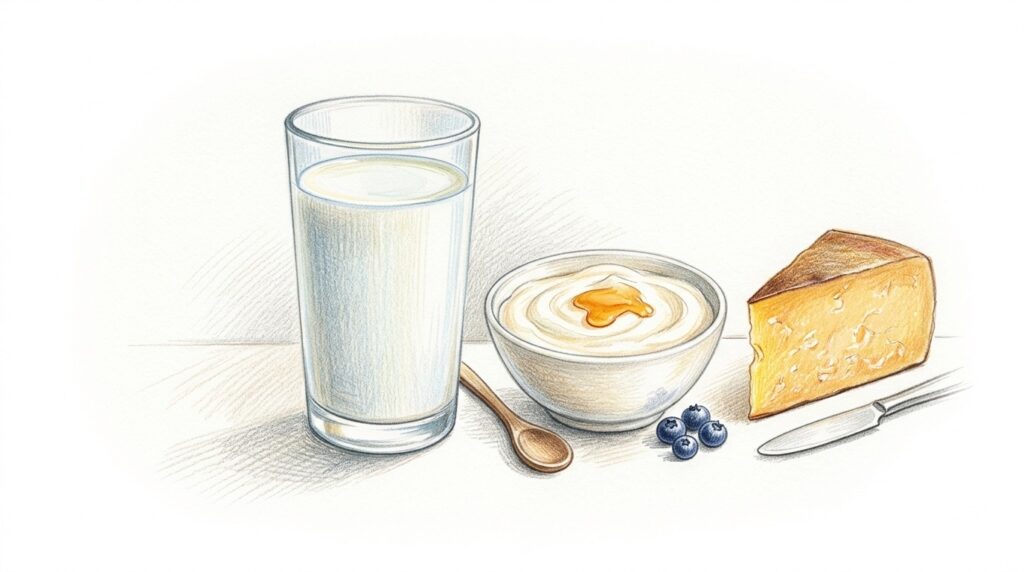
If you’re managing gout, dairy is one of the few food groups that’s genuinely on your side.
The relationship between dairy and gout is one of the clearest wins in the research. Low-fat milk and yoghurt don’t just avoid making things worse, they actively help bring uric acid levels down and reduce gout risk.
That’s unusual. Most dietary advice for gout is about what to cut out. Dairy is something you can actually add.
But not all dairy is equal. A skinny flat white and a cream-laden pasta sauce are not doing the same thing for your body.
Here’s what the research says, and how to use it.
How Dairy Protects Against Gout
The science here is solid.
A major study published in the New England Journal of Medicine found that higher dairy intake was associated with significantly lower uric acid levels and reduced gout risk. A 2024 meta-analysis linked dairy consumption to a 31% reduction in the risk of hyperuricaemia, the precursor to gout.
Two things are happening when you consume dairy.
Dairy is naturally low in purines
Unlike meat and seafood, milk and most dairy products contain very little purine, the compound your body converts into uric acid, which then triggers gout flare-ups. So dairy gives you protein without the uric acid penalty.
Milk proteins boost uric acid excretion
This is the real advantage. The proteins in milk, specifically casein and lactalbumin (a whey protein), stimulate your kidneys to excrete more uric acid. One study found that drinking milk reduced serum uric acid levels by about 10% within hours.
That’s a measurable, same-day effect.
So dairy works on both sides: less uric acid coming in, more going out. Fewer gout attacks as a result.
The Best Dairy for Gout
Not all dairy products are equal. Here’s how they stack up.
Your everyday choices
Skim or low-fat milk
Your best option. Low-fat milk gives you the protein benefits (casein and whey) with less saturated fat. Use it in your morning coffee, pour it on cereal, or drink a glass with dinner. Any standard supermarket brand works fine.
Low-fat yoghurt
Plain, unsweetened yoghurt is excellent. It contains the same beneficial proteins as milk, plus probiotics for gut health. Research shows people who eat yoghurt regularly have lower uric acid levels and fewer gout flare-ups.
Go for plain Greek yoghurt or plain unsweetened varieties. Avoid the flavoured ones loaded with sugar, because sugar is its own problem for gout.
Cottage cheese and ricotta
Both are high in protein and low in fat. Cottage cheese on toast or ricotta in a salad are easy ways to get more low-fat dairy into your diet.
Fine in moderation
Full-cream milk
Full-fat milk still contains the beneficial proteins, but the higher saturated fat content makes it a less ideal everyday choice. If you prefer the taste, it’s not going to ruin things. But low-fat is better for this specific purpose.
Hard cheeses
Cheddar, tasty, and other hard cheeses are higher in fat and calories. A slice or two is fine. Making cheese the foundation of your dairy intake is less ideal than milk or yoghurt.
Be careful with these
Cream and butter
High in fat, low in the beneficial milk proteins. Cream and butter don’t give you the gout-protective benefits of milk. They’re essentially dairy fat without the good stuff.
Sweetened dairy
Flavoured milks, sweetened yoghurts, ice cream. The added sugar in these products can actually increase uric acid production, which defeats the purpose entirely. Always check the label.
How Much Dairy Should You Have?
The research suggests at least one to two servings of low-fat dairy per day for meaningful gout protection. A serving looks like:
- A glass of low-fat milk (250ml)
- A tub of plain yoghurt (150g)
- A couple of slices of cheese (40g)
Two servings a day is a realistic, sustainable target.
You don’t need to force down litres of milk. A flat white with skim milk in the morning and a yoghurt in the afternoon gets you there.
Practical Ways to Add More Dairy
Here are some easy wins:
- Switch your coffee milk to low-fat. If you’re having two or three coffees a day, that adds up.
- Have plain Greek yoghurt with fruit after dinner instead of dessert.
- Add a glass of milk to your breakfast routine.
- Use cottage cheese as a high-protein snack on crackers or toast.
- Mix yoghurt into smoothies with berries and banana.
- Use ricotta instead of cream cheese where you can.
What If You’re Lactose Intolerant?
If dairy doesn’t agree with your stomach, you have options.
- Lactose-free milk (like Liddells or Zymil) still contains the same proteins. It’s just as effective for gout protection.
- A2 milk works well for people who react to A1 protein but can handle A2.
- Hard cheeses are naturally lower in lactose than milk.
- Yoghurt is often better tolerated than milk because the bacteria have already broken down much of the lactose.
If you genuinely can’t do any dairy, focus on other foods that help with gout and make sure you’re drinking enough water to support uric acid excretion through your kidneys.
The Bigger Picture
Dairy is one piece of the puzzle. It works best as part of an overall approach that includes staying hydrated, eating plenty of vegetables and fruit, limiting high-purine foods, and keeping sugar intake in check.
Your kidneys are responsible for excreting about two-thirds of the uric acid your body produces. Anything that supports kidney function, including adequate hydration and the right dietary choices, helps keep uric acid levels where they should be and reduces your gout risk.
The Bottom Line
Dairy is one of the most practical, evidence-backed tools for managing gout.
Low-fat milk and plain yoghurt are your best options. Have at least one to two servings a day. Avoid sweetened dairy products and don’t rely on cream or butter for the benefits.
Simple, affordable, and something most people can add to their routine without any drama.
For broader support, I created URICAH with 14 natural ingredients at transparent dosages to help maintain healthy uric acid levels. No proprietary blends. Over 2,200 customer reviews. Free shipping across Australia, and a 90-day money-back guarantee.
This article is for informational purposes only and is not intended as medical advice. Consult your healthcare provider before making changes to your health routine.

URICAH! Uric Acid Support
4.85 / 5
read 2,290 customer reviews
$39 AUDTHIS IS YOUR URICAH MOMENT
Our 14 potent, natural ingredients support the body in lowering uric acid levels, alleviating the excruciating pain and discomfort caused by gout.
URICAH™ features powerful ingredients used over thousands of years to fight gout such as Tart Cherry, Celery Seed and Chanca Piedra.
Get back on your feet and live pain free with URICAH™.
LEARN MORE