
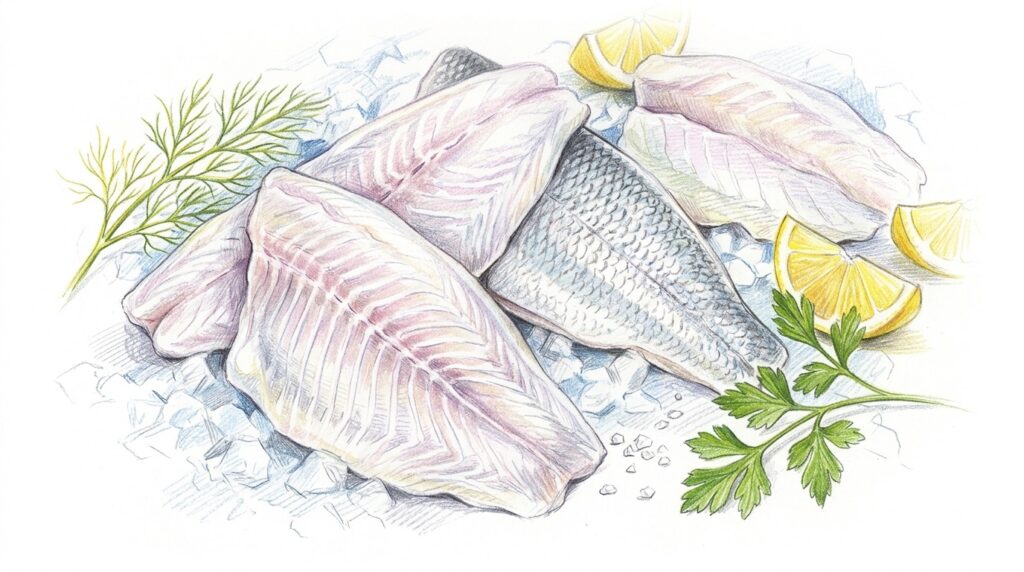
Fish gets a bad reputation when it comes to gout.
People get diagnosed, read a list of high-purine foods, see “seafood” on it, and assume they need to avoid fish entirely.
That’s a mistake. And it costs you one of the healthiest protein sources available.
The best fish for gout are the low-purine white varieties, and there are plenty of them. Some fish are genuinely problematic due to their purine content. Others are perfectly safe, even beneficial, for people managing gout.
The difference comes down to species, preparation, and portion size.
Here’s what you actually need to know.
Low-Risk White Fish: Your Safe Zone
White, non-oily fish are low in purines and high in protein. They’re some of the best protein sources you can eat with gout.
The best options
Basa, whiting, tilapia, and flake (shark). These are all readily available at Australian fishmongers and supermarkets, and they sit firmly in the low-purine category.
Barramundi is another excellent choice. It’s a staple of Australian cooking, mild in flavour, and lower in purines than oily fish varieties.
Flathead, John Dory, and ling are also good options.
Why white fish works
These fish are lean. They don’t store much fat in their flesh, which means lower purine concentrations. They give you high-quality protein without the uric acid spike that fattier fish can cause.
You can eat white fish several times a week without concern. It’s one of the genuine “eat freely” categories for gout.
Moderate-Risk Oily Fish: Worth the Trade-Off
Oily fish sit in the moderate purine range. They’re higher than white fish, but they bring significant health benefits that make them worth including in moderation.
The most popular oily fish in Australia. Moderate in purines, but rich in omega-3 fatty acids, which have anti-inflammatory properties. Once or twice a week in 100g portions is a reasonable approach.
Ocean trout
Similar to salmon in both purine content and nutritional benefits. A good alternative if you want variety.
Mackerel
This one straddles the line. In small amounts, it’s manageable. In quantity or eaten frequently, it moves into the high-risk territory. One serving a week is a sensible limit.
Prawns, crab, and mussels fall into the moderate category. They need limits. Once or twice a week, reasonable portions.
The rule for moderate fish
One to two servings per week, around 100g per serving. That’s about the size of a deck of cards. Balance it with vegetables and drink water with the meal.
High-Risk Fish: Minimise or Avoid
These are the fish that earn seafood its bad reputation with gout sufferers.
Anchovies
Extremely high in purines. Whether on pizza, in a Caesar salad, or from a tin, anchovies are one of the worst fish choices for gout.
Sardines
Another very high-purine fish. A tin of sardines might seem like a healthy lunch, but for gout management, it’s a significant risk.
Herring
High in purines and commonly eaten smoked or pickled, which can make things worse.
Mackerel in quantity
As mentioned, small amounts of mackerel are manageable. But eating it regularly or in larger serves pushes it firmly into the high-risk zone.
Fish roe
Fish eggs are concentrated purine sources. Caviar, taramasalata, and any roe-based products are best avoided.
How You Prepare It Matters
The same fish can be low-risk or high-risk depending on how it’s prepared.
Best cooking methods
Grill it. Steam it. Bake it with a splash of water or lemon juice. Poach it in broth. These methods keep the fish lean and don’t add anything that increases your risk.
What to avoid
Battered and deep-fried fish. Fish and chips is an Australian institution, but the batter and oil add fat and calories without any benefit. If you’re having fish, have it simply prepared.
Preserved fish is worse than fresh
Salted, smoked, and oil-packed fish all carry higher purine loads than their fresh equivalents. Tinned fish in oil, smoked salmon, and salt cod are all more problematic than the fresh versions.
If you’re eating tinned fish, choose varieties packed in spring water rather than oil.
A Practical Weekly Approach
Here’s what a reasonable week of fish consumption looks like for someone managing gout:
- Two to three servings of white fish (basa, whiting, flake, barramundi)
- One to two servings of oily fish (salmon, ocean trout)
- Shellfish once a week at most
- Zero servings of anchovies, sardines, herring, or fish roe
Pair every fish meal with non-starchy vegetables. Drink water before, during, and after. Keep portions at around 100g.
That’s a diet that includes plenty of fish, gives you the omega-3 benefits, and keeps your purine load manageable.
The Bottom Line
Fish is not the enemy. The wrong fish, in the wrong amounts, prepared the wrong way, that’s the problem.
White fish is genuinely safe and should be a regular part of your gout-friendly diet. Oily fish like salmon offers real health benefits in moderation. The few high-purine varieties are easy to avoid once you know which ones they are.
If you’re looking for additional support alongside dietary changes, I created URICAH with 14 clearly labelled natural ingredients to help support healthy uric acid levels. No proprietary blends, transparent dosages, and a 90-day money-back guarantee.
Don’t cut fish out. Just be smart about which ones you choose.
This article is for informational purposes only and is not intended as medical advice. Consult your healthcare provider before making changes to your health routine.

URICAH! Uric Acid Support
4.85 / 5
read 2,290 customer reviews
$39 AUDTHIS IS YOUR URICAH MOMENT
Our 14 potent, natural ingredients support the body in lowering uric acid levels, alleviating the excruciating pain and discomfort caused by gout.
URICAH™ features powerful ingredients used over thousands of years to fight gout such as Tart Cherry, Celery Seed and Chanca Piedra.
Get back on your feet and live pain free with URICAH™.
LEARN MORE