
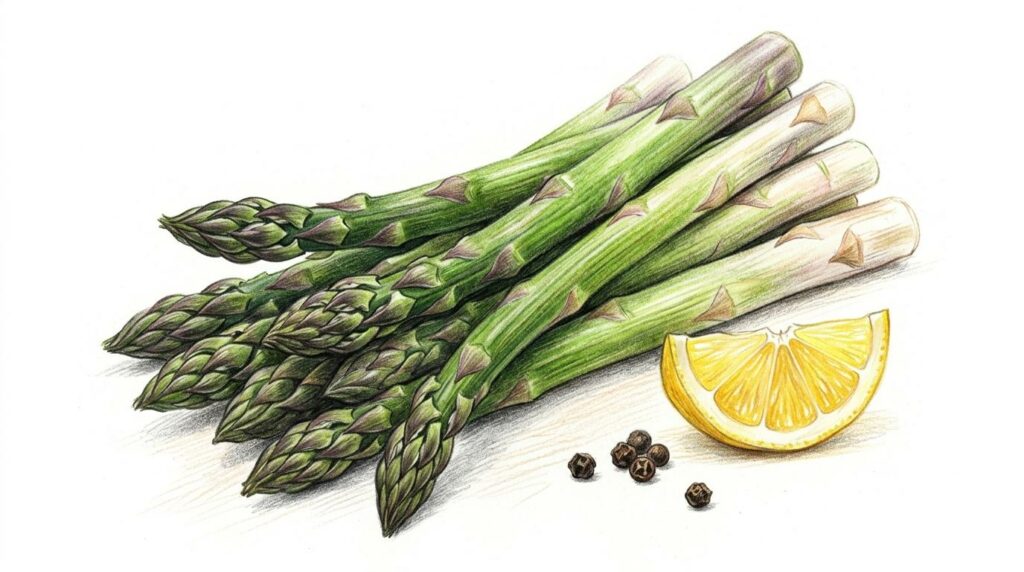
The internet has done asparagus dirty.
Search “asparagus and gout” and you’ll find it listed alongside organ meats and anchovies as a food to avoid. That grouping is absurd, and the research has debunked it thoroughly.
Asparagus contains moderate purines. That’s true. But plant purines don’t behave like animal purines, and large-scale studies show no connection between vegetable consumption and gout risk.
Here’s what the evidence actually says, and why asparagus deserves a place on your plate.
The Purine Numbers in Context
Asparagus contains approximately 23mg of purines per 100g.
That places it squarely in the moderate range. Not low, not high.
Purine content per 100g
- Asparagus: ~23mg
- Spinach: ~50-70mg
- Broccoli: ~20-25mg
- Chicken breast: 100-130mg
- Beef: 110-150mg
- Organ meats: 300+mg
A typical serving of asparagus is six to eight spears, roughly 100-120g. At 23mg of purines, that’s negligible in the context of your overall daily intake.
Asparagus sits comfortably alongside other everyday vegetables and nowhere near the levels found in the high-purine foods that genuinely warrant caution.
Why Plant Purines Don’t Trigger Gout
This is the critical point. It applies to asparagus, mushrooms, beans and lentils, spinach, and every other vegetable that gets unfairly blamed.
Plant purines and animal purines are not equal.
The BMJ study
A landmark study published in the BMJ analysed dietary data from 47,150 men over 12 years. The researchers specifically separated plant-based purine intake from animal-based purine intake.
The result: purine-rich vegetable consumption was not associated with an increased risk of gout.
Not slightly associated. Not weakly associated. Not associated at all.
Animal purines told a completely different story. Meat and seafood consumption showed a clear, dose-dependent relationship with increased gout risk.
Why the difference?
Several mechanisms explain why plant purines behave differently.
Bioavailability
Plant purines are less bioavailable than animal purines. Your body doesn’t convert them into uric acid as efficiently. A portion of the purines in asparagus passes through your system without contributing significantly to uric acid production.
Fibre and other compounds
Vegetables like asparagus come packaged with fibre, vitamins, and antioxidants that may support uric acid metabolism. You’re not consuming purines in isolation; you’re consuming them alongside compounds that may help your body manage them.
Alkalising effect
Most vegetables, asparagus included, have an alkalising effect on urine pH. This may help your kidneys excrete uric acid more efficiently. Animal proteins tend to acidify urine, which can reduce uric acid clearance.
Asparagus Is Actually Good for You
Beyond the purine question, asparagus brings genuine nutritional benefits that support overall health and may help with gout management.
Vitamin C
Asparagus is a good source of vitamin C. Research has shown that vitamin C intake is inversely associated with uric acid levels. A meta-analysis published in Arthritis & Rheumatism found that vitamin C supplementation reduced serum uric acid. Getting it from food is even better.
Folate
Asparagus is one of the best vegetable sources of folate. Some research suggests folate may help inhibit xanthine oxidase, the enzyme involved in uric acid production. The evidence is preliminary, but it’s another point in asparagus’s favour.
Anti-inflammatory compounds
Asparagus contains saponins and flavonoids with anti-inflammatory properties. Chronic inflammation and gout often go hand in hand, and foods that help manage inflammation support your overall health picture.
Diuretic properties
Asparagus has a mild natural diuretic effect, which is why it makes your urine smell. This increased urination may help your body excrete more uric acid. It’s a mild effect, not a treatment, but it’s working in the right direction.
What About the “Avoid” Lists?
You’ll still find asparagus on some gout avoidance lists, especially older ones. Here’s why those lists are wrong.
They were created based on purine content alone.
Early dietary guidelines for gout didn’t distinguish between plant and animal purines. Any food with moderate or high purine content was flagged. Asparagus, spinach, mushrooms, peas, and cauliflower all ended up on the same list as liver, kidneys, and sardines.
That approach has been thoroughly debunked.
Modern guidelines from rheumatology organisations no longer recommend restricting purine-rich vegetables. The American College of Rheumatology, EULAR, and other major bodies have updated their positions based on the evidence.
Restricting vegetables based on purine content is unnecessary and counterproductive. You’d be cutting out nutritious, anti-inflammatory foods for no measurable benefit.
Practical Ways to Enjoy Asparagus
Australian asparagus is in season from September through December, with prime availability in spring. You can find imported asparagus year-round at Woolies, Coles, and good greengrocers.
Roasted
Toss spears with olive oil, salt, and pepper. Roast at 200C for 12-15 minutes until tender with slightly charred tips. Simple and delicious. Serve alongside eggs for a low-purine meal.
On the barbecue
Asparagus is brilliant on the barbie. Lightly oiled, seasoned, and grilled for a few minutes per side. Perfect as a side dish at any summer cook-up.
In salads
Blanch asparagus for two minutes, plunge into cold water, then slice on an angle. Add to grain salads, green salads, or pasta salads.
In stir-fries
Cut into 3cm pieces and add to stir-fries in the last few minutes of cooking. Pairs well with tofu, chicken, and other vegetables.
Steamed
The classic approach. Steam for three to four minutes until bright green and just tender. A squeeze of lemon and a pinch of salt is all you need.
In soups
Asparagus soup is a spring staple. Saute with onion and garlic, add stock, simmer until tender, and blend. Finish with a splash of cream or a dollop of yoghurt.
How Much Can You Eat?
There’s no restriction on asparagus for gout management.
Eat it as often as you like, in normal quantities. A standard serving of six to eight spears a few times a week is perfectly fine. Daily consumption is also not a concern.
The research is unambiguous: vegetable consumption, including moderate-purine vegetables like asparagus, is not associated with increased gout risk.
The only people who might need to exercise any caution are those on specific dietary restrictions from their specialist for advanced kidney disease. In that case, follow your doctor’s guidance on overall purine intake from all sources.
For everyone else, asparagus is a green light.
The Bottom Line
Asparagus is safe for gout management. No qualification needed.
The moderate purine content is irrelevant because plant purines don’t increase your risk of gout. The BMJ study of over 47,000 men confirmed this decisively.
Beyond safety, asparagus is actively beneficial. It provides vitamin C, folate, anti-inflammatory compounds, and a mild diuretic effect that may support uric acid excretion.
Don’t restrict healthy vegetables based on outdated purine lists. Your diet should include more vegetables, not fewer.
For more on which vegetables are safe, read our comprehensive guide on vegetables and purines. And for practical meal ideas, check out our low-purine recipes for Australia.
Looking for support beyond what’s on your plate? I created URICAH with 14 natural ingredients at transparent dosages to help maintain healthy uric acid levels. No proprietary blends. Over 2,200 customer reviews. Free shipping across Australia, and a 90-day money-back guarantee.
This article is for informational purposes only and is not intended as medical advice. Consult your healthcare provider before making changes to your health routine.

URICAH! Uric Acid Support
4.85 / 5
read 2,290 customer reviews
$39 AUDTHIS IS YOUR URICAH MOMENT
Our 14 potent, natural ingredients support the body in lowering uric acid levels, alleviating the excruciating pain and discomfort caused by gout.
URICAH™ features powerful ingredients used over thousands of years to fight gout such as Tart Cherry, Celery Seed and Chanca Piedra.
Get back on your feet and live pain free with URICAH™.
LEARN MORE